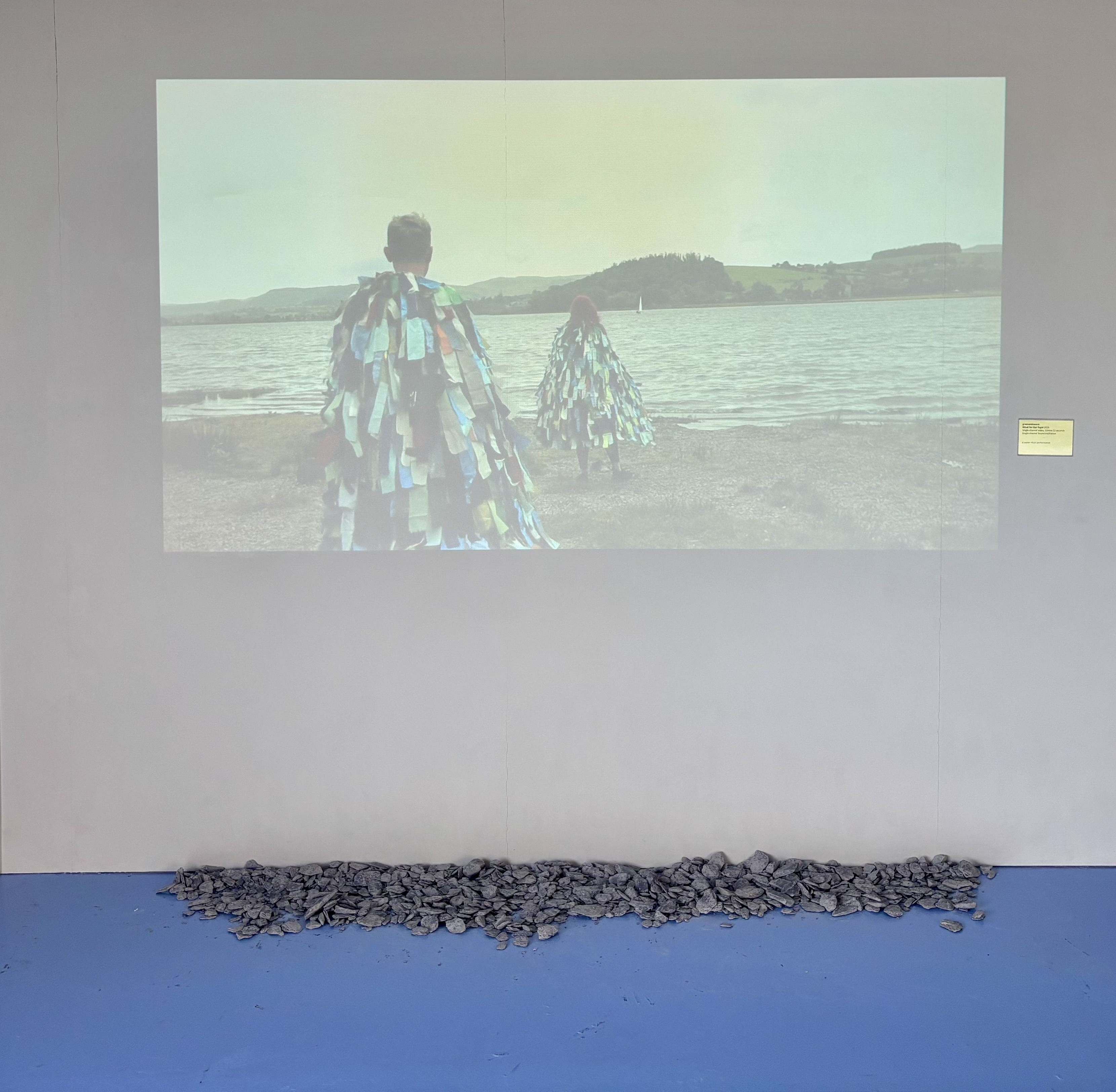
Exhibition as part of stage one of The Body in Water research project.
Pink Gallery, Stockport / 8 – 25 August 2026 12.00 – 17.00 / PV 7 August 18.00 – 21.00
Exhibition blurb
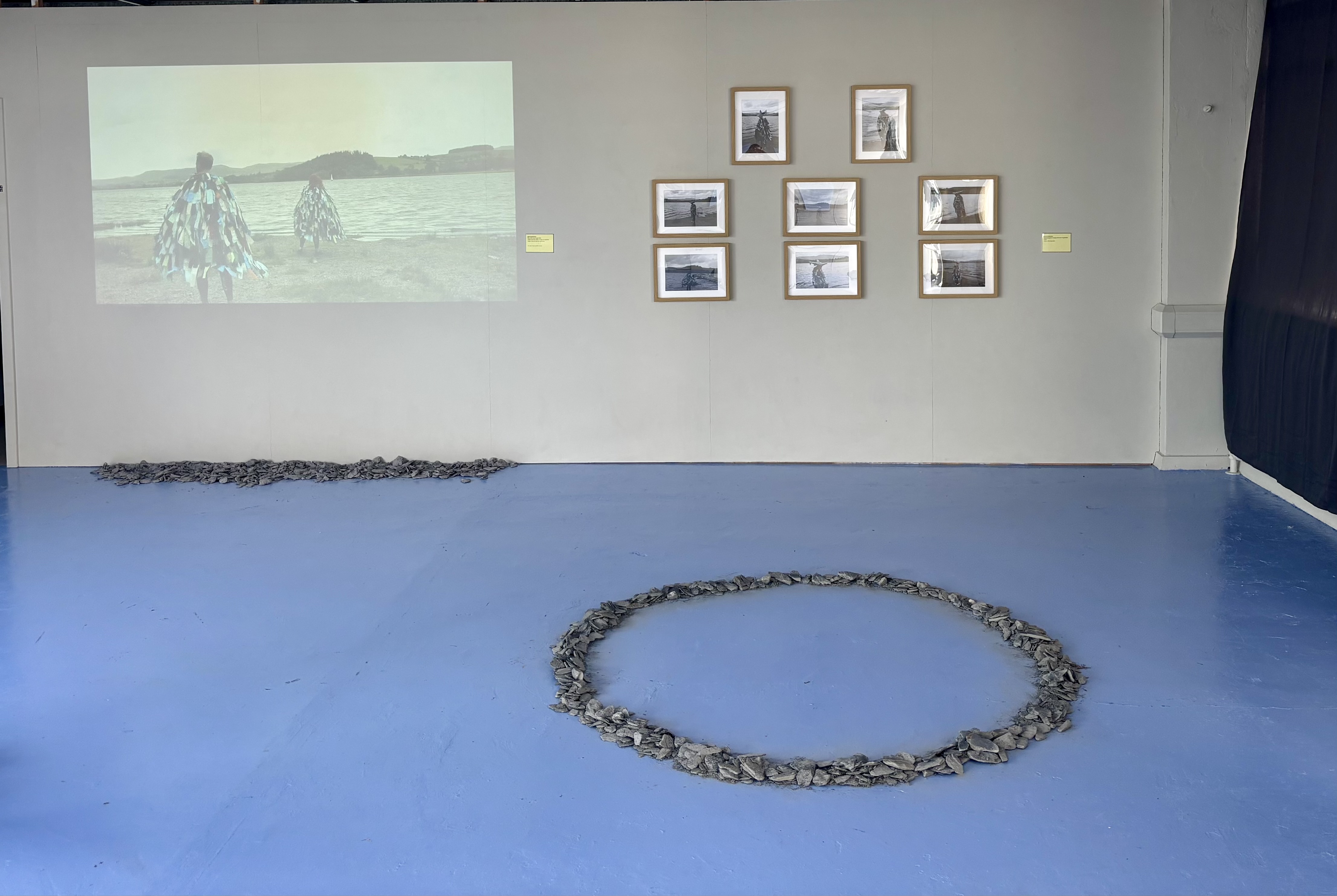
Bodies in Water is a new exhibition by Manchester-based artistic duo greenandowens (Katheryn Owens and Chris Green), exploring human relationships with water, through swimming as both subject and methodology. The works presented here respond to Llyn Tegid (Bala Lake) in North Wales and the rich mythology that surrounds it. Bringing together sound, text, moving image and sculptural objects, the multidisciplinary installation reflects the artists’ embodied experience of the site and its layered histories.
Llyn Tegid, alongside other bodies of water including Mermaid’s Pool in the Peak District, is surrounded by stories of mythical beings and submerged worlds. Tales of dragons, the lights of a sunken town, giant water creatures and Foel Tegid, the ancient ruler of the town beneath the lake, reflect the enduring sense of mystery that water can evoke. Such myths can be understood as expressions of our anxieties about the unknown, giving form to the dangers and uncertainties associated with deep water, unfamiliar sounds and ancient rituals whose meanings may seem otherworldly to us today. If water holds stories as well as reflections, what might it be asking us to notice? What histories remain just beneath the surface?
Bodies in Water marks the first stage of a larger research project situated within the emerging field of the blue humanities. Bringing together perspectives from art, literature, environmental humanities and cultural history, the blue humanities seeks to reimagine human relationships with oceans, lakes, rivers and other aquatic environments. Through an immersive encounter with Llyn Tegid, the exhibition invites audiences to consider water not simply as a landscape or resource, but as a place of memory, myth and embodied experience.
Supported through Edge Hill University’s Research Investment Fund.
Translation by Iola Pritchard-Bland.
Tech support from Jude Wilkinson at Edge Hill University.
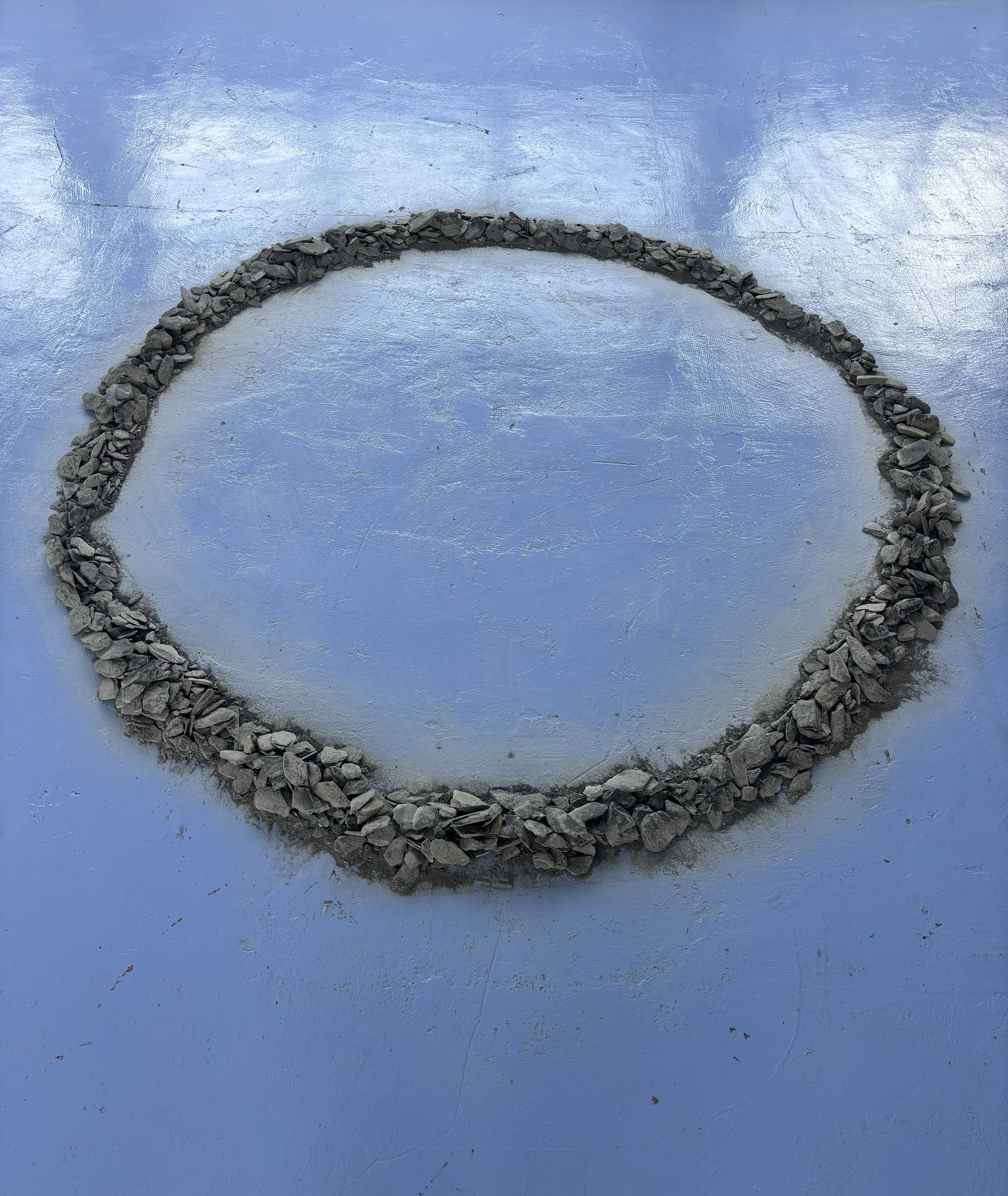
Exhibition Images
List of works
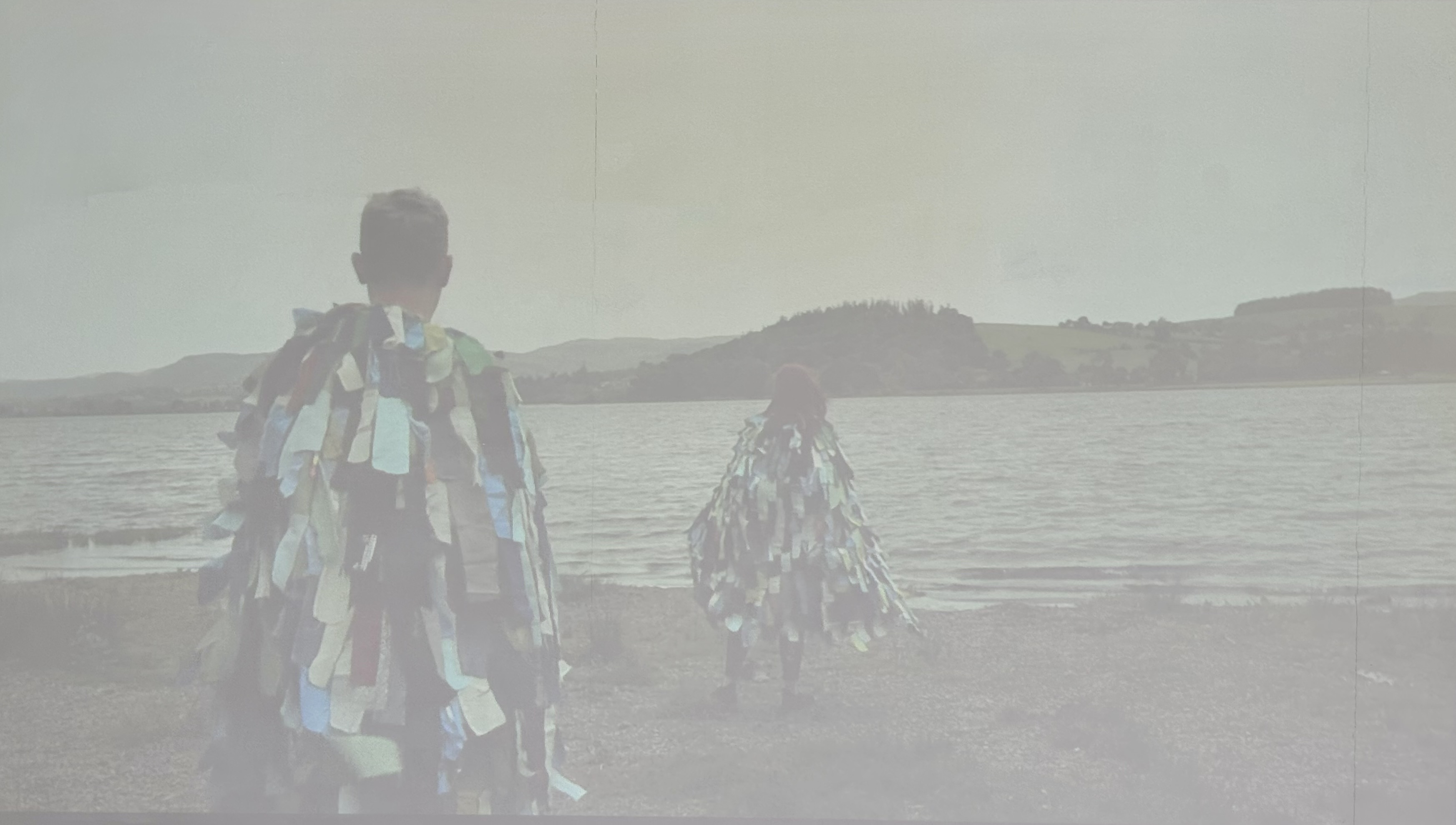
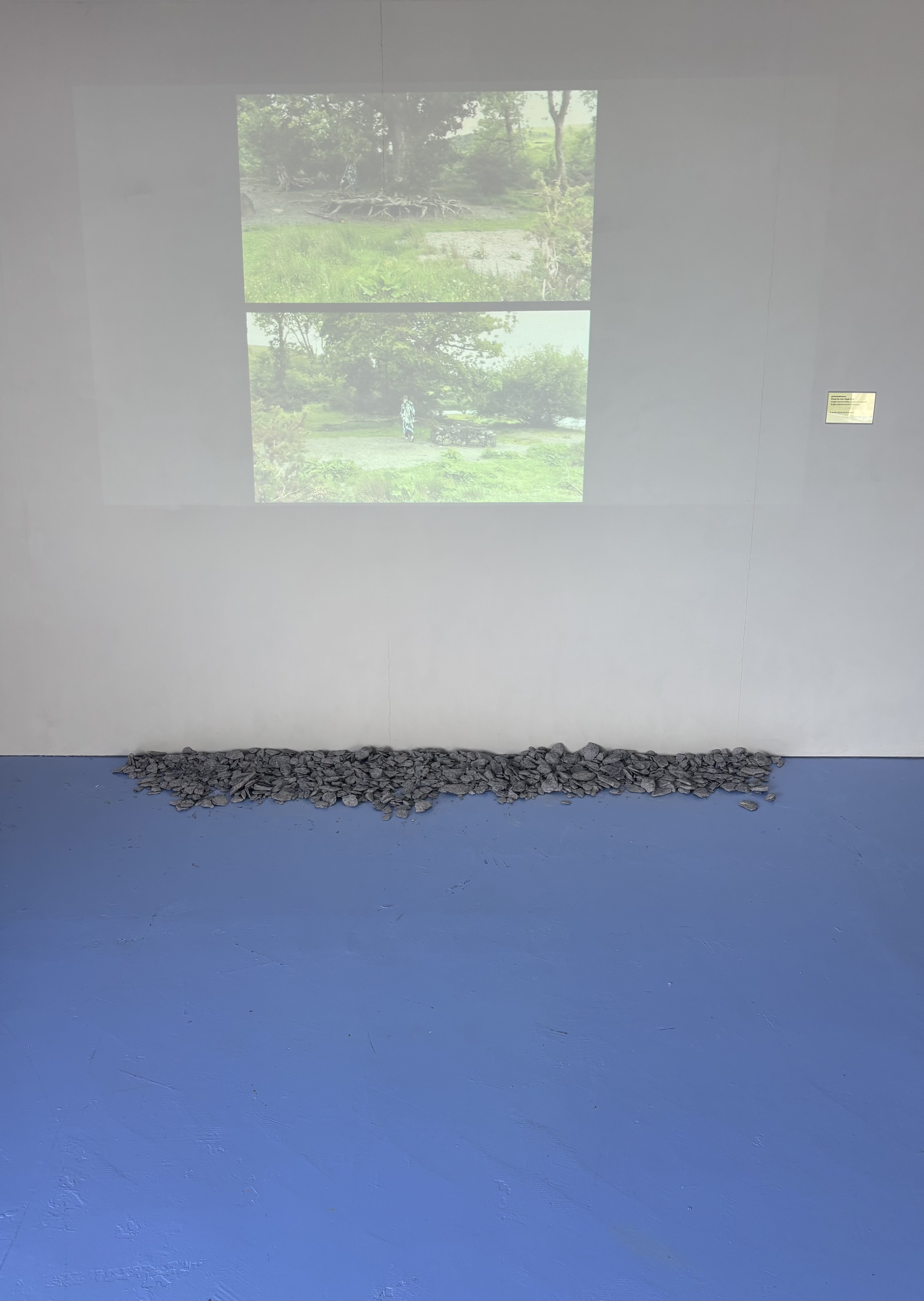
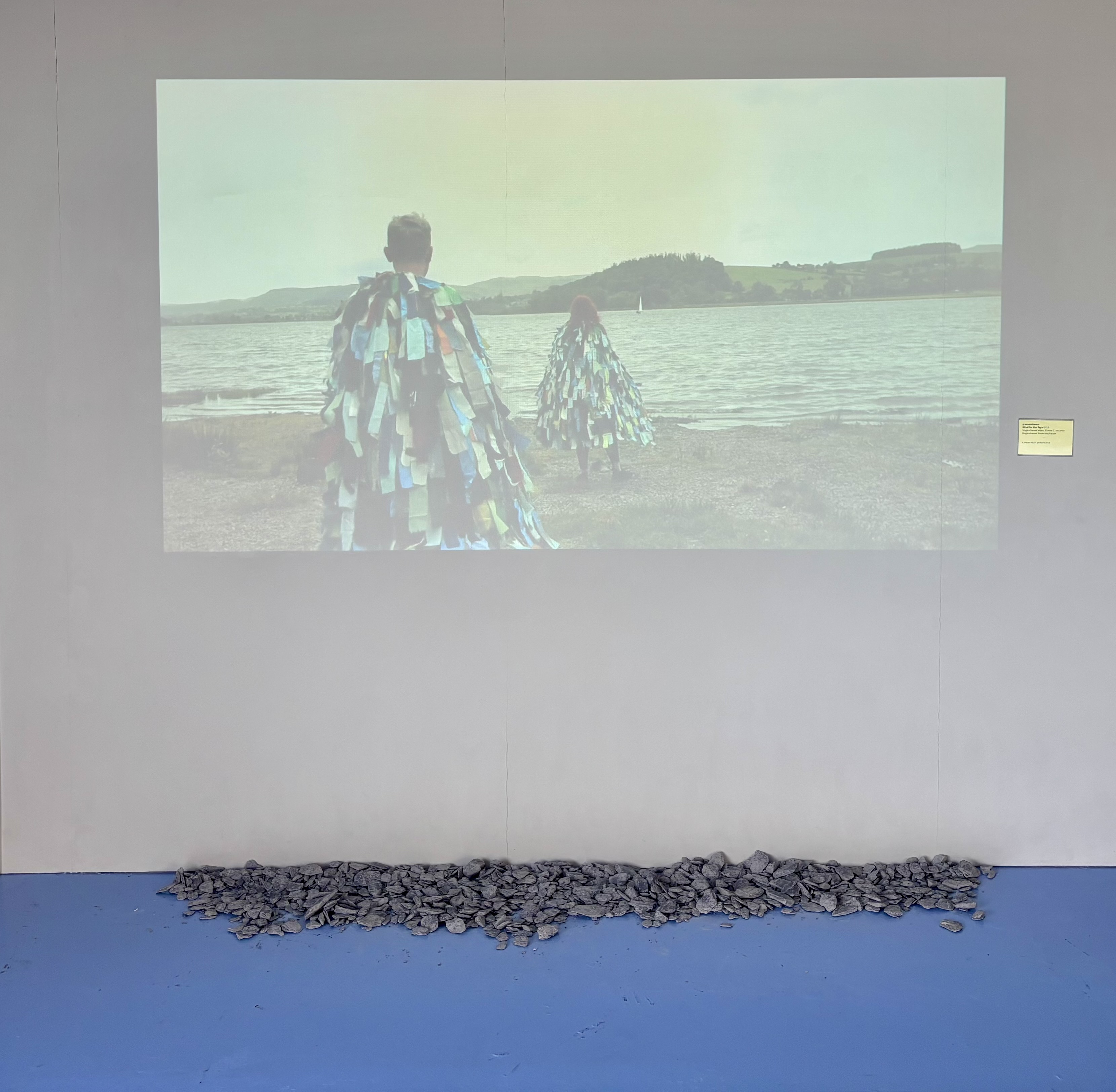
Ritual for Llyn Tegid, 2026
Single-channel video, 12mins 22 seconds
Single-channel Sound instillation,
Water ritual performance.
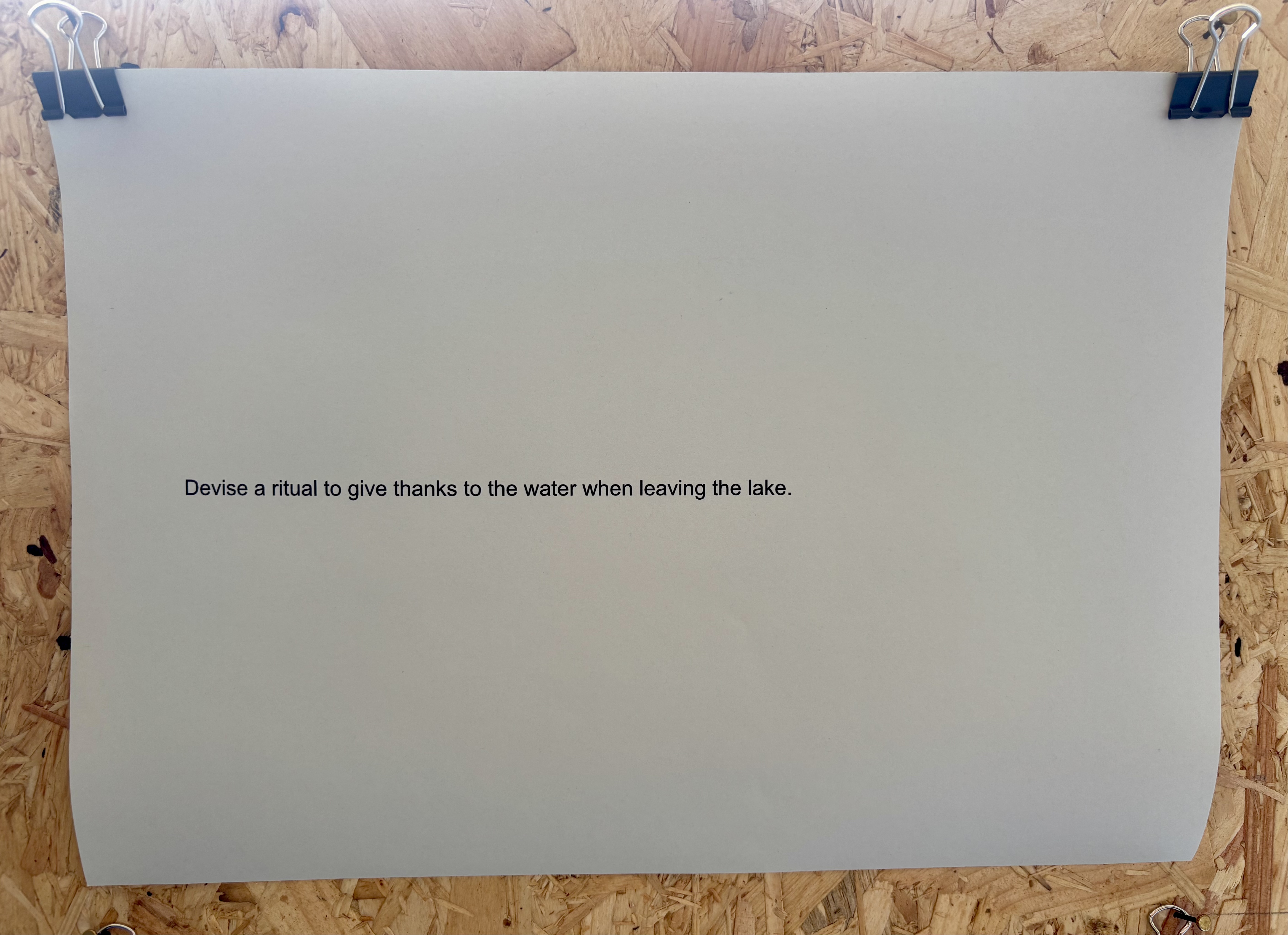
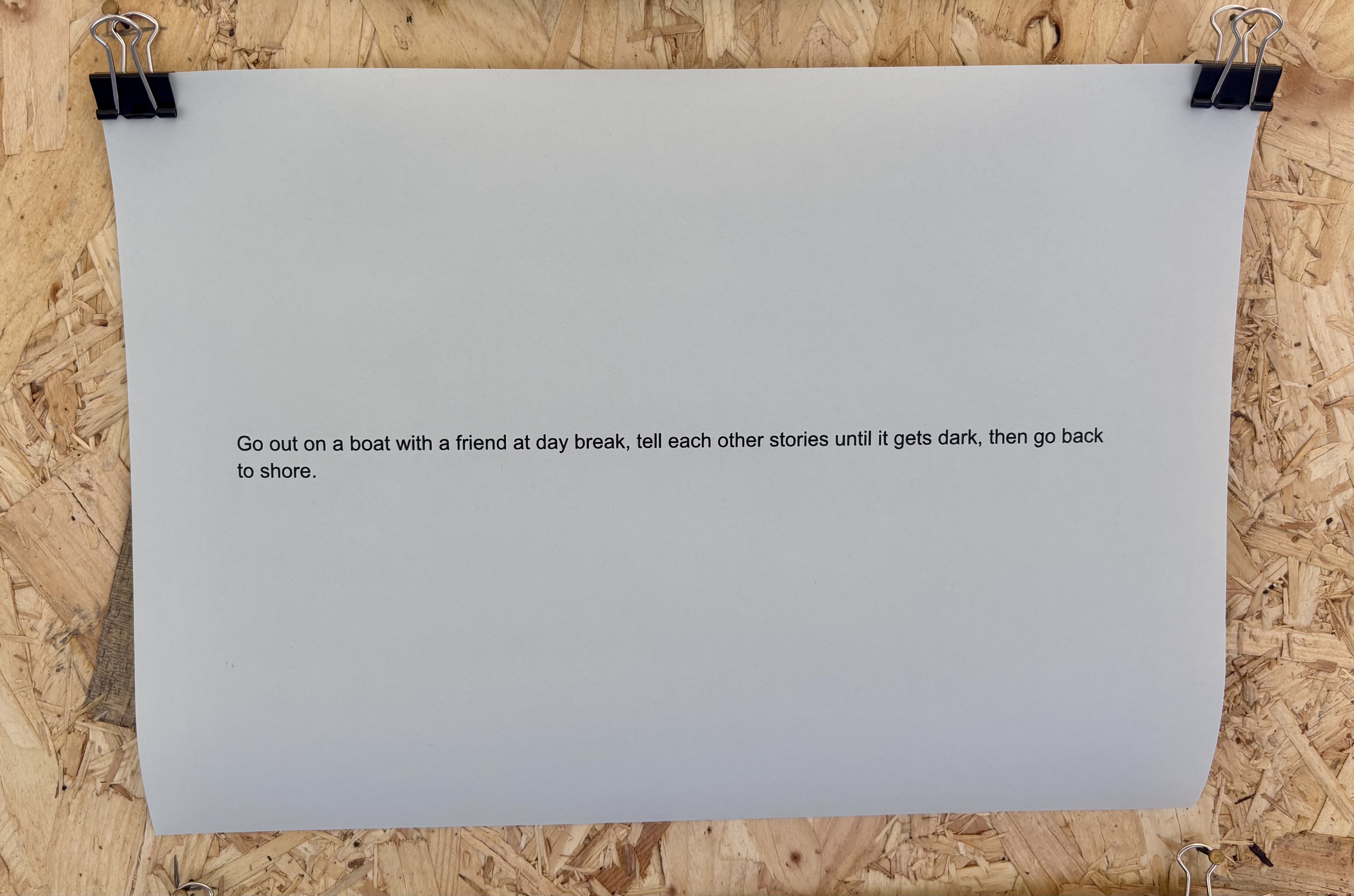
Scores for Swimming, 2026
Series of scores printed on paper.
We invite you to create your own swimming score.
Myths of Llyn Tegid, 2026
Two-channel audio, 3 minutes 31 seconds
English version:
Please wear the headset and press play to listen.
Welsh version:
Please wear the headset and press play to listen.
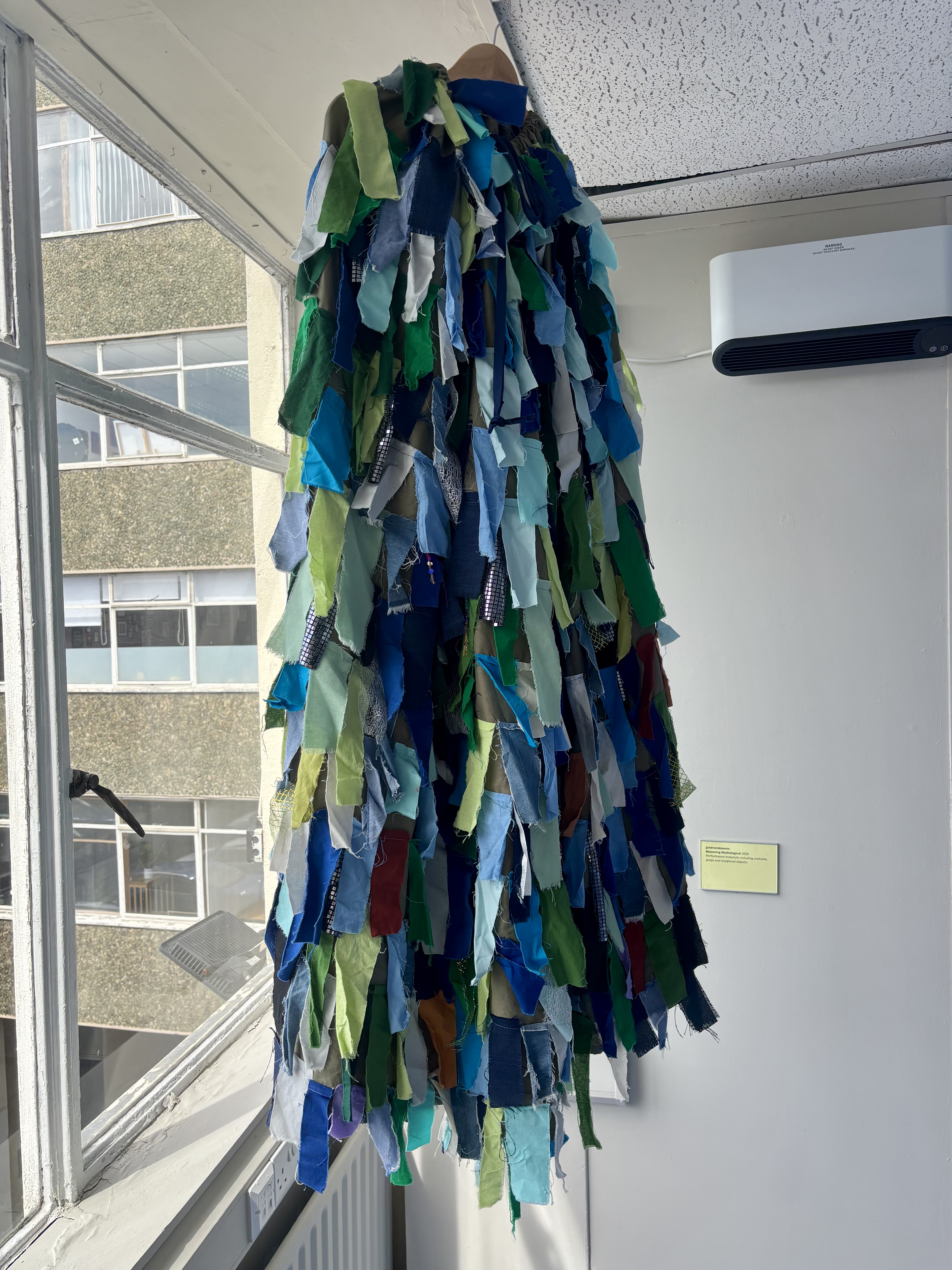
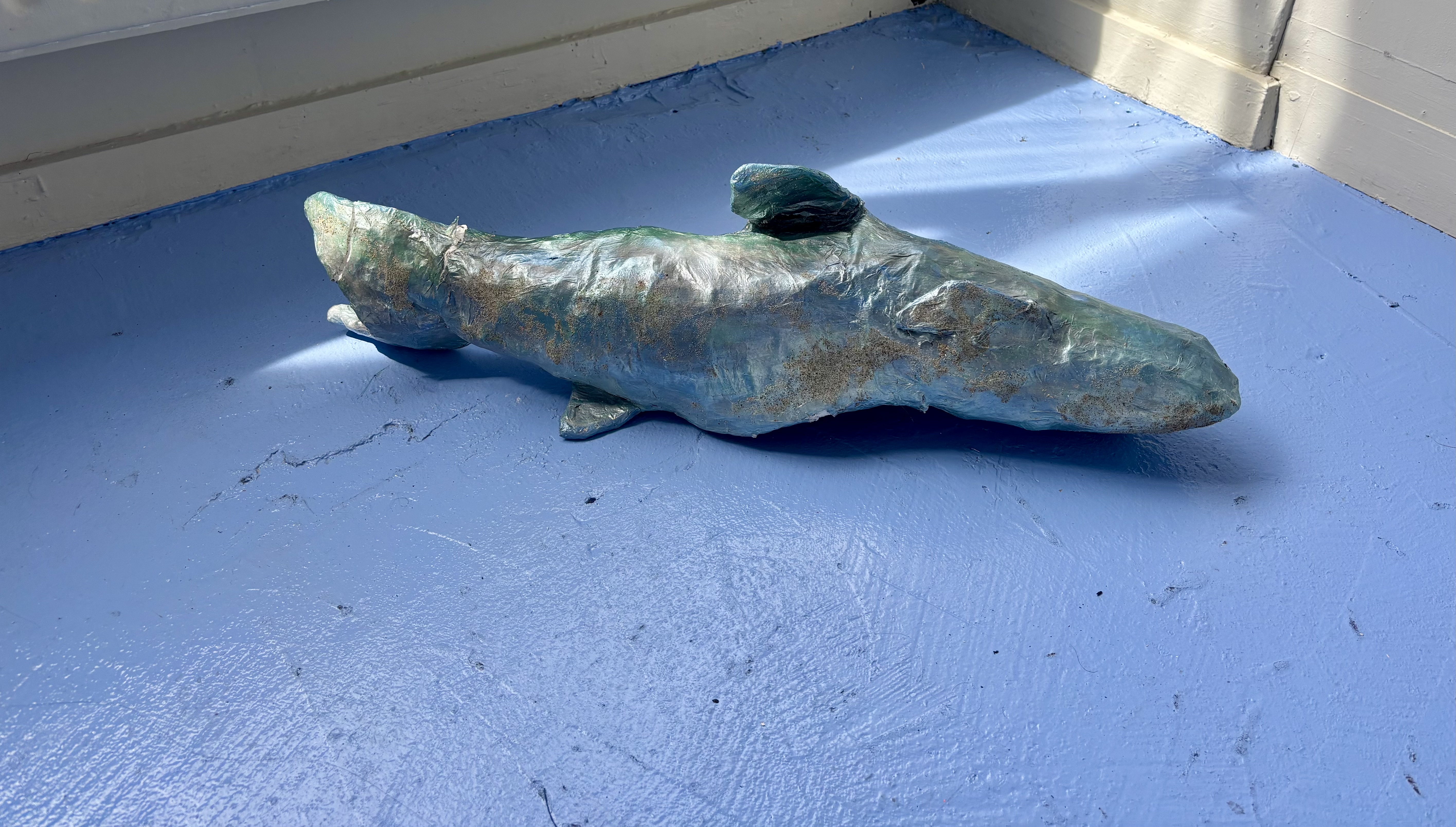
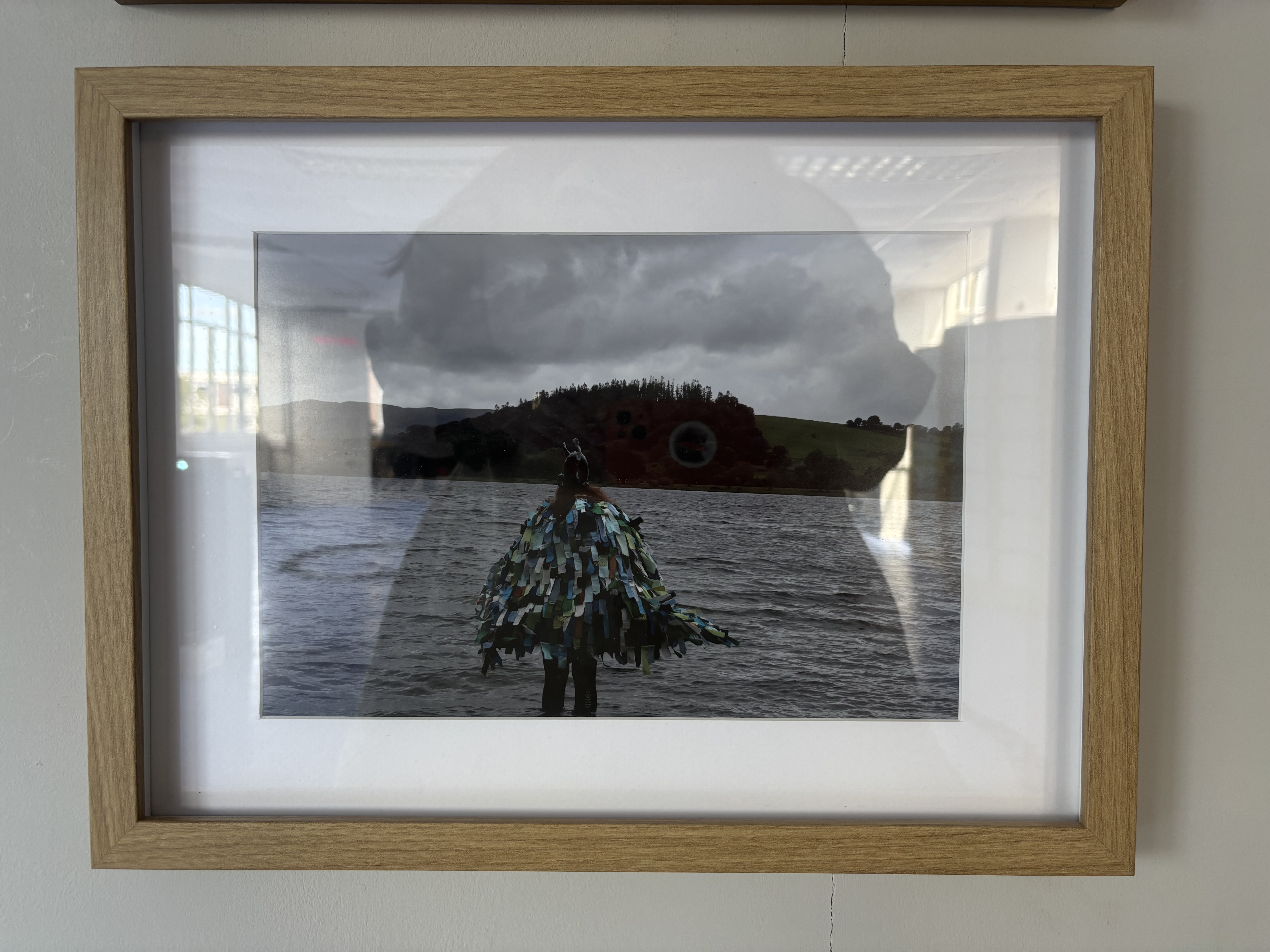
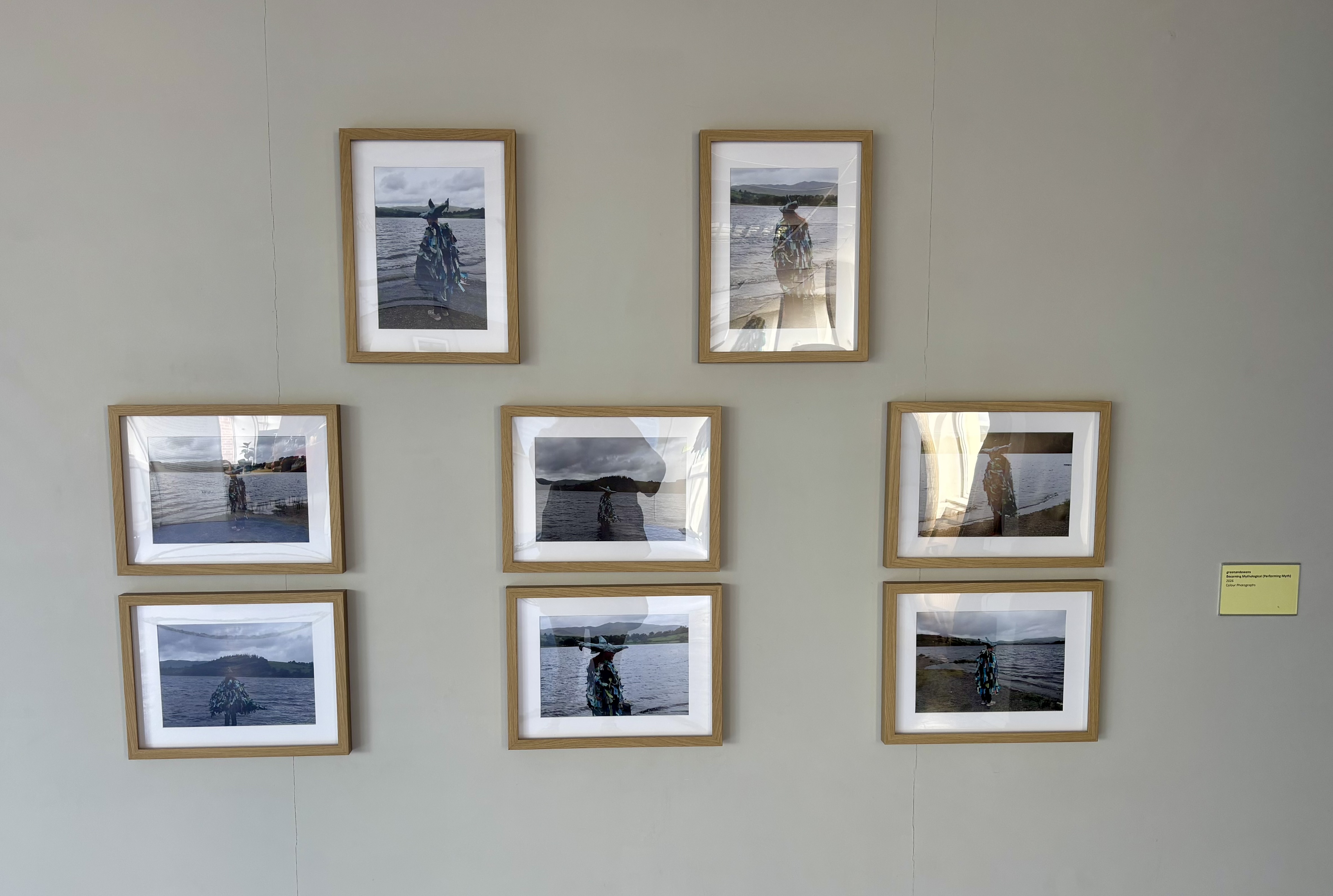
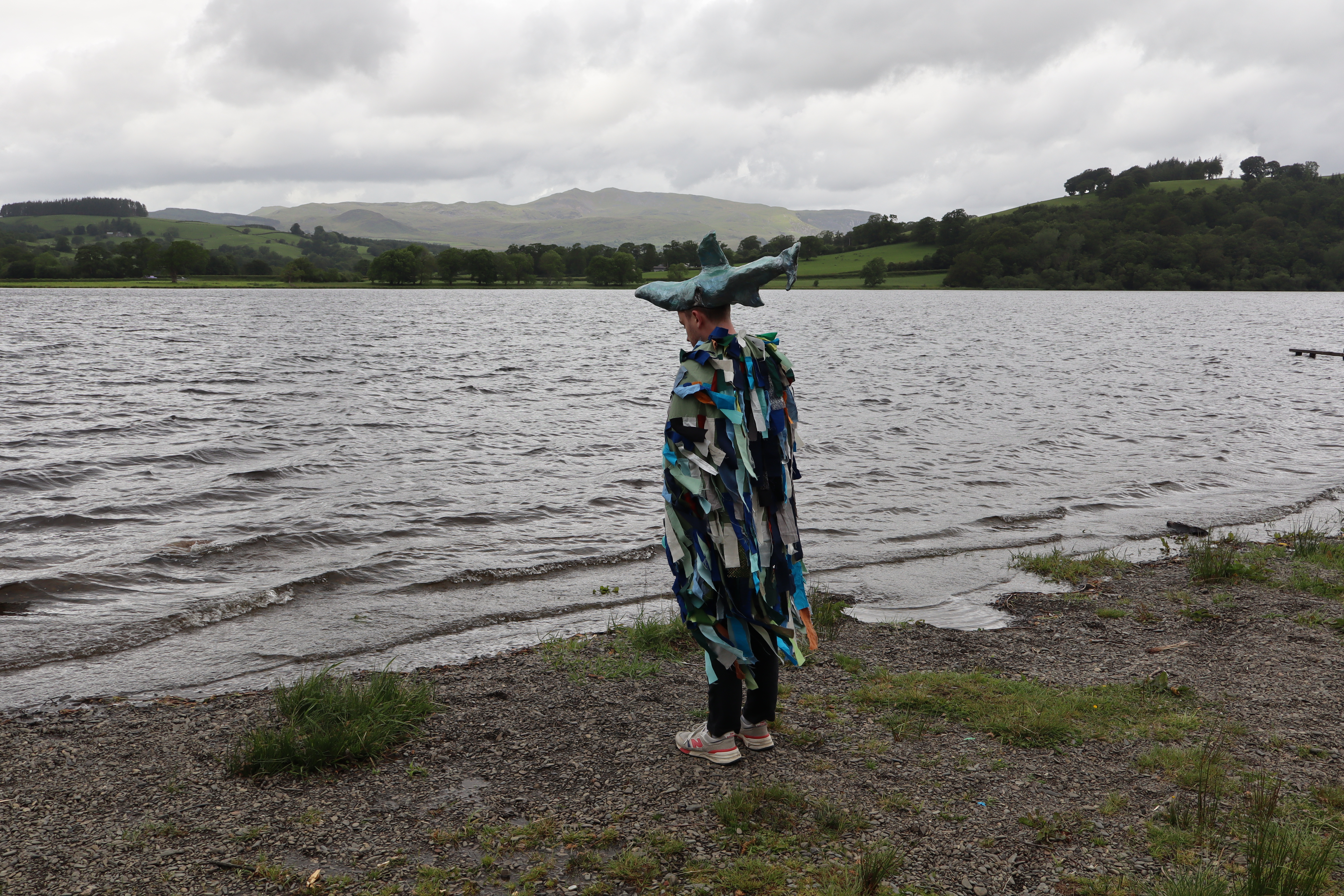
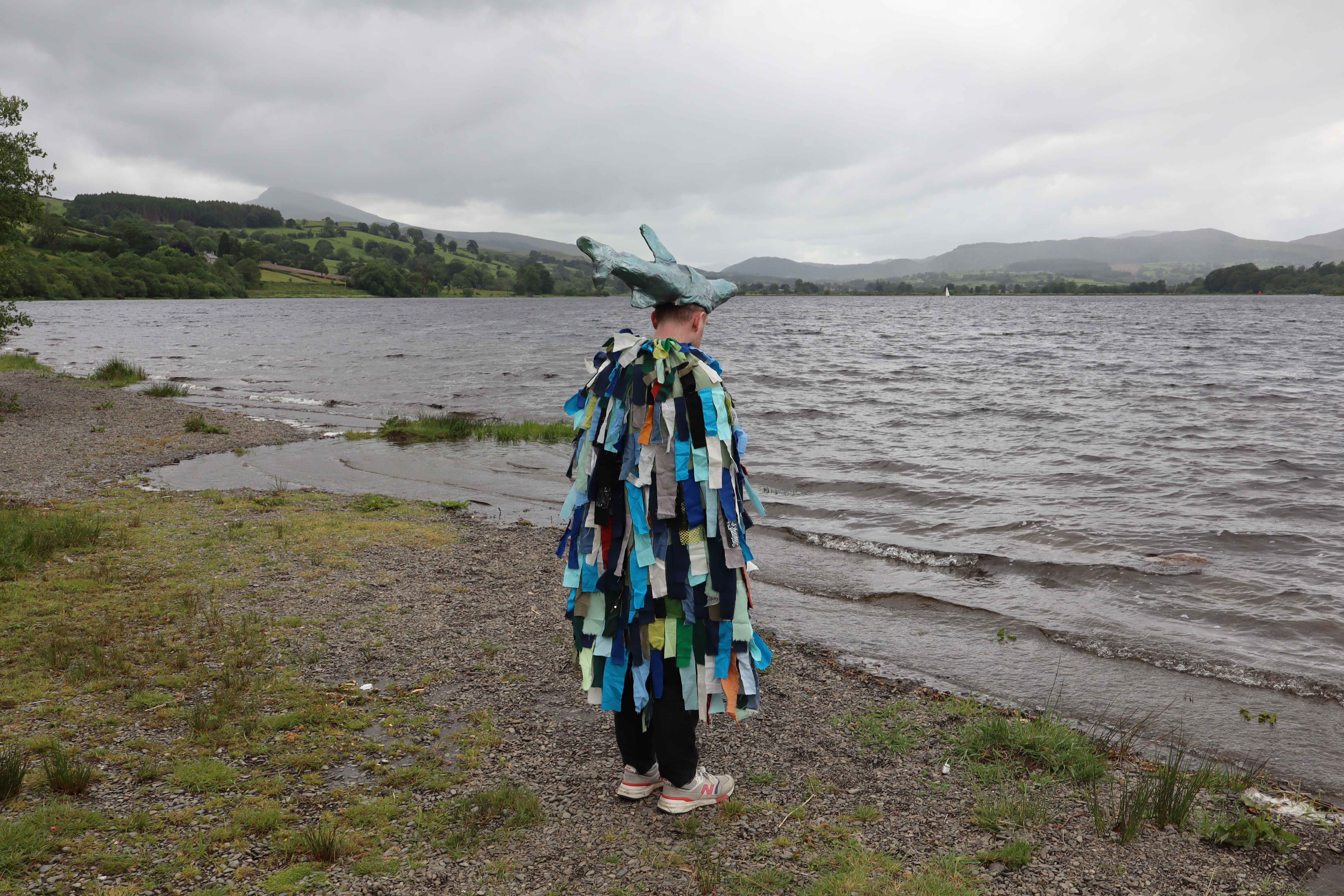
Becoming Mythological, 2026
Series of framed photographs.
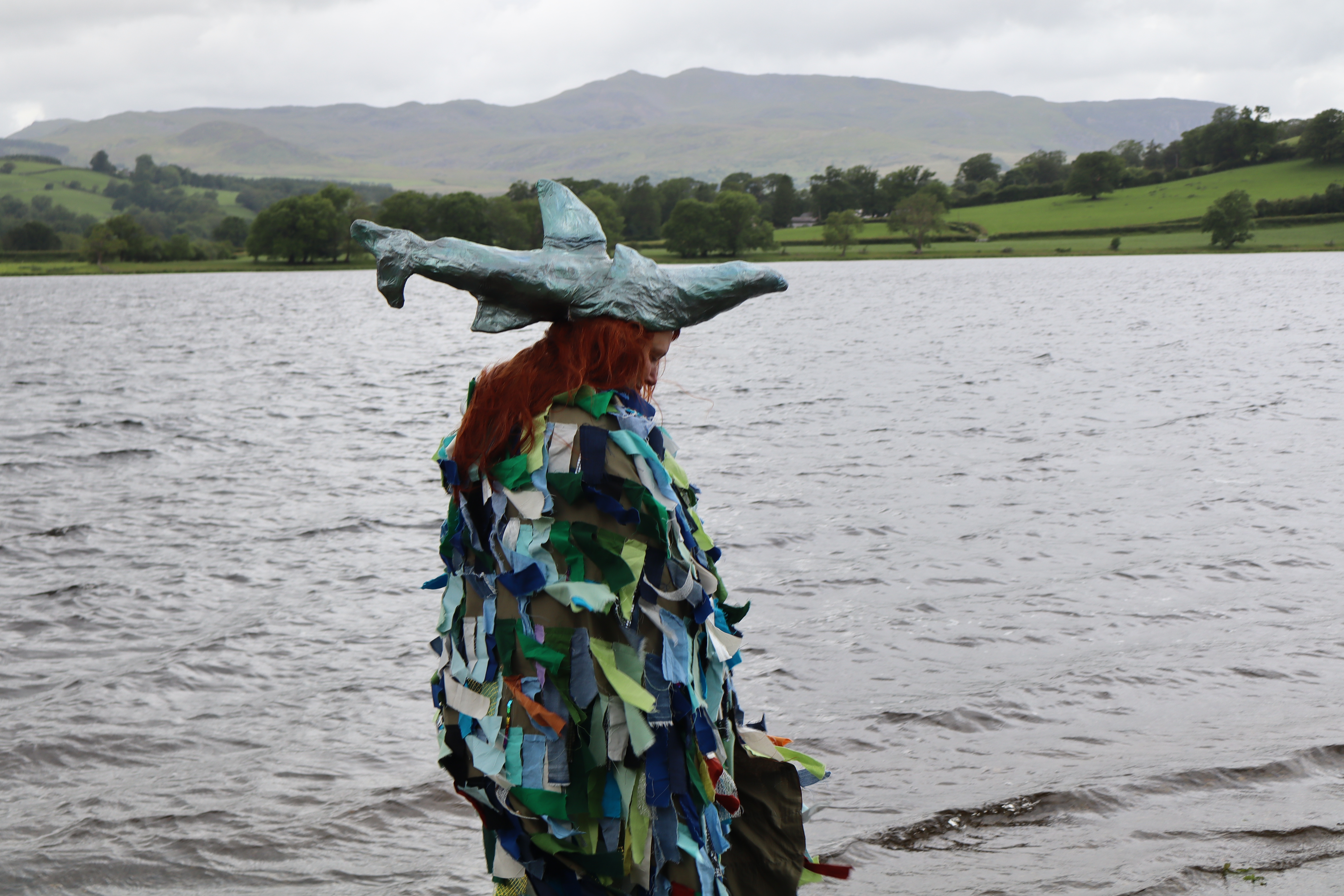
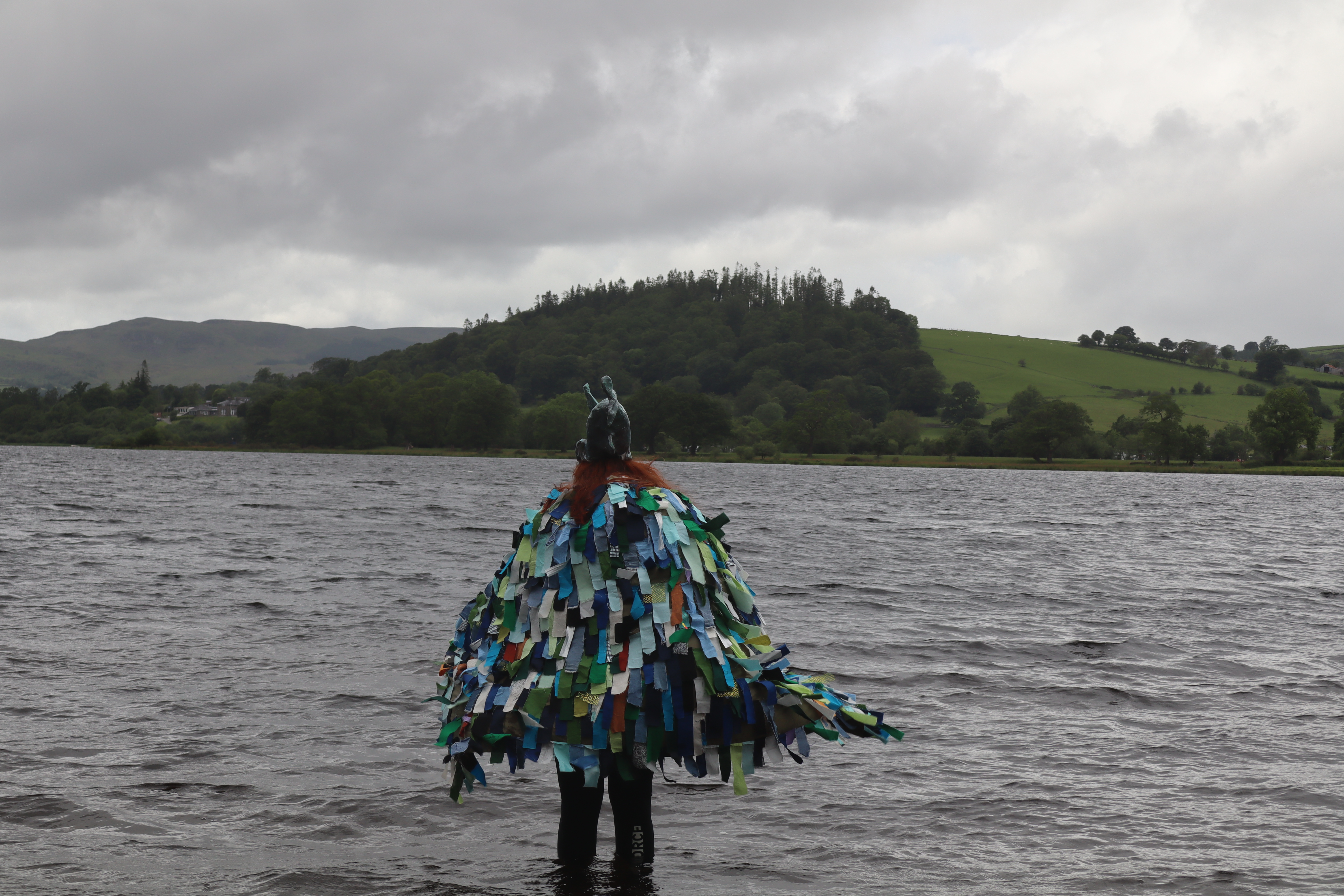
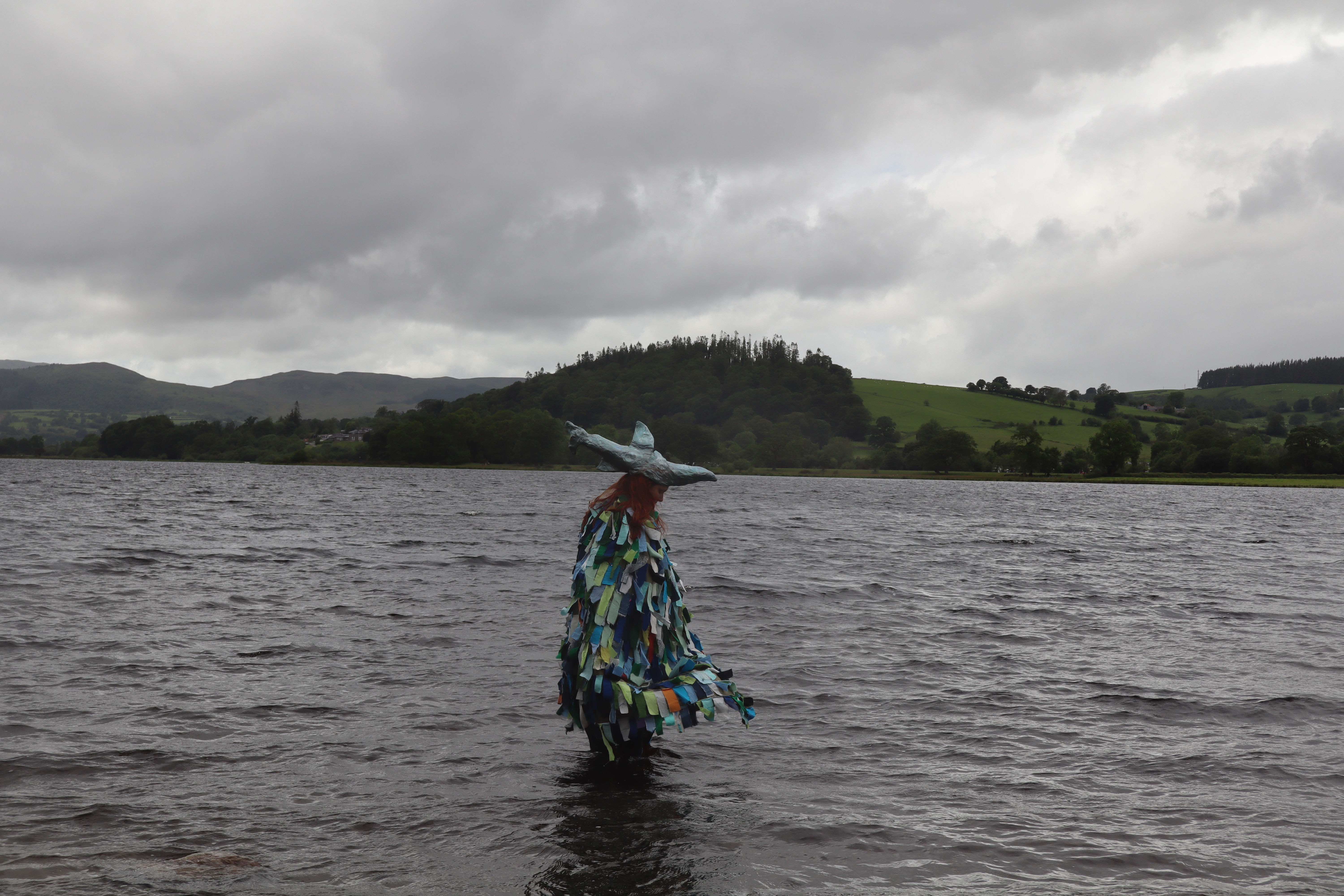
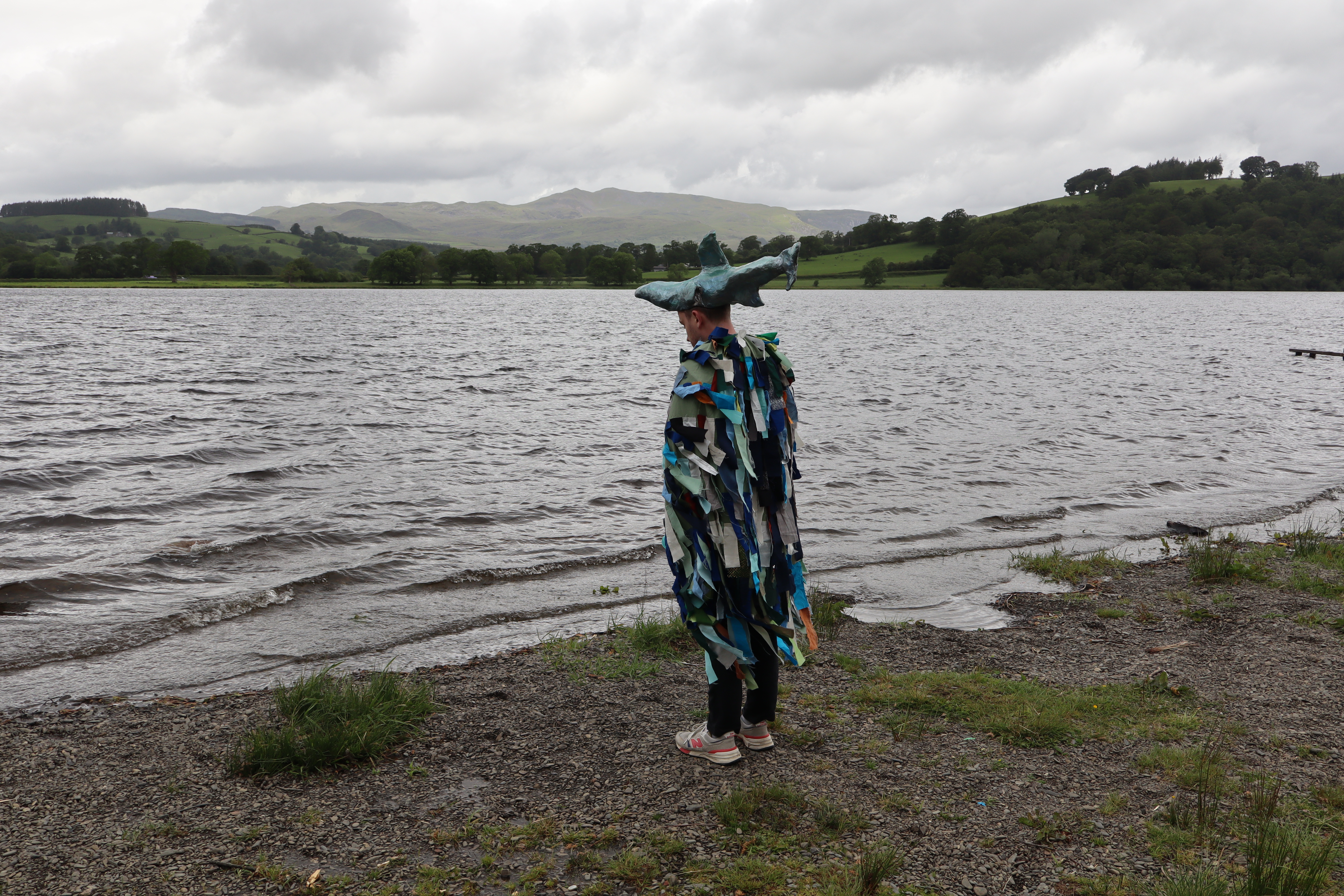
Performing myth.
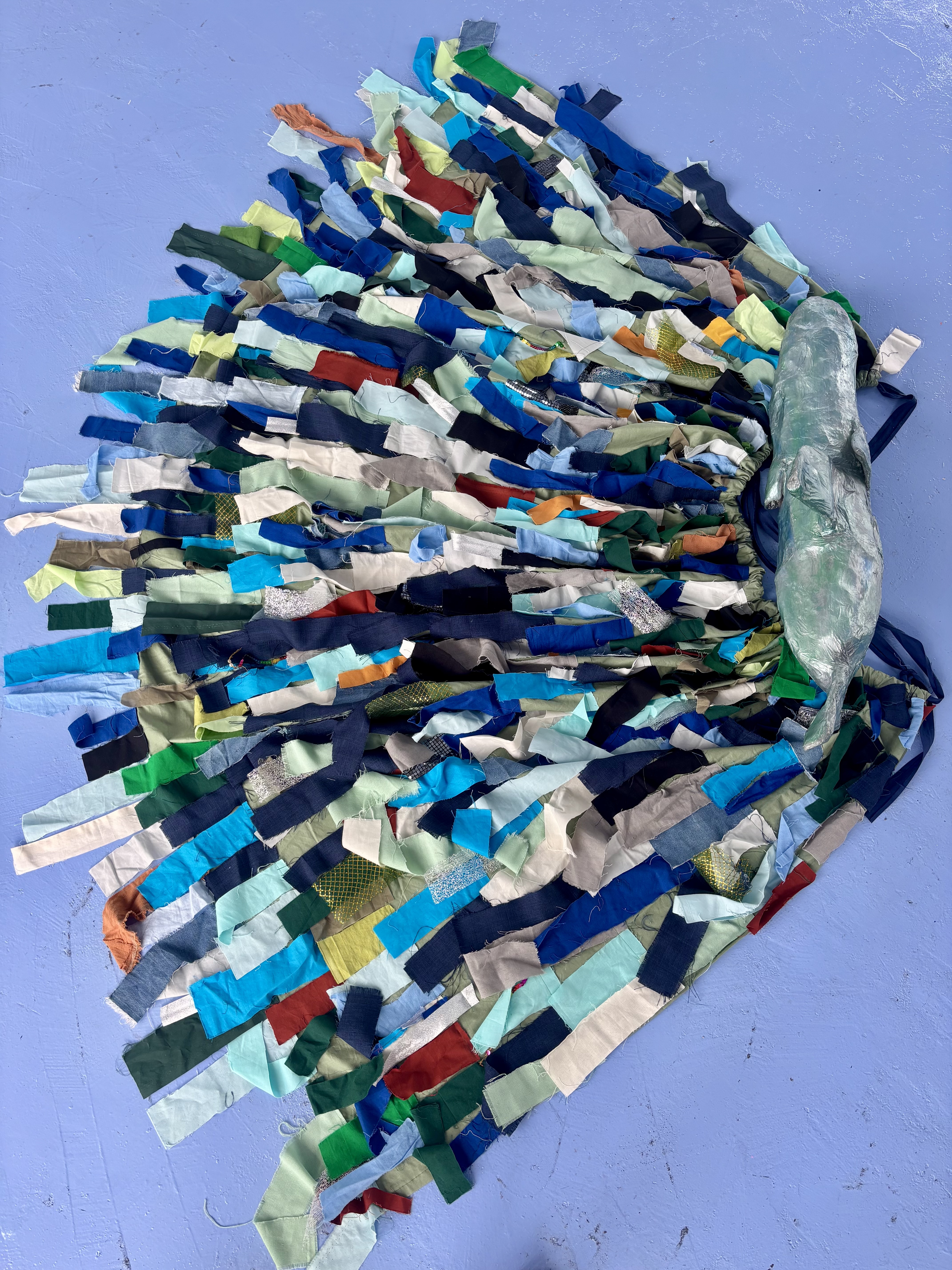
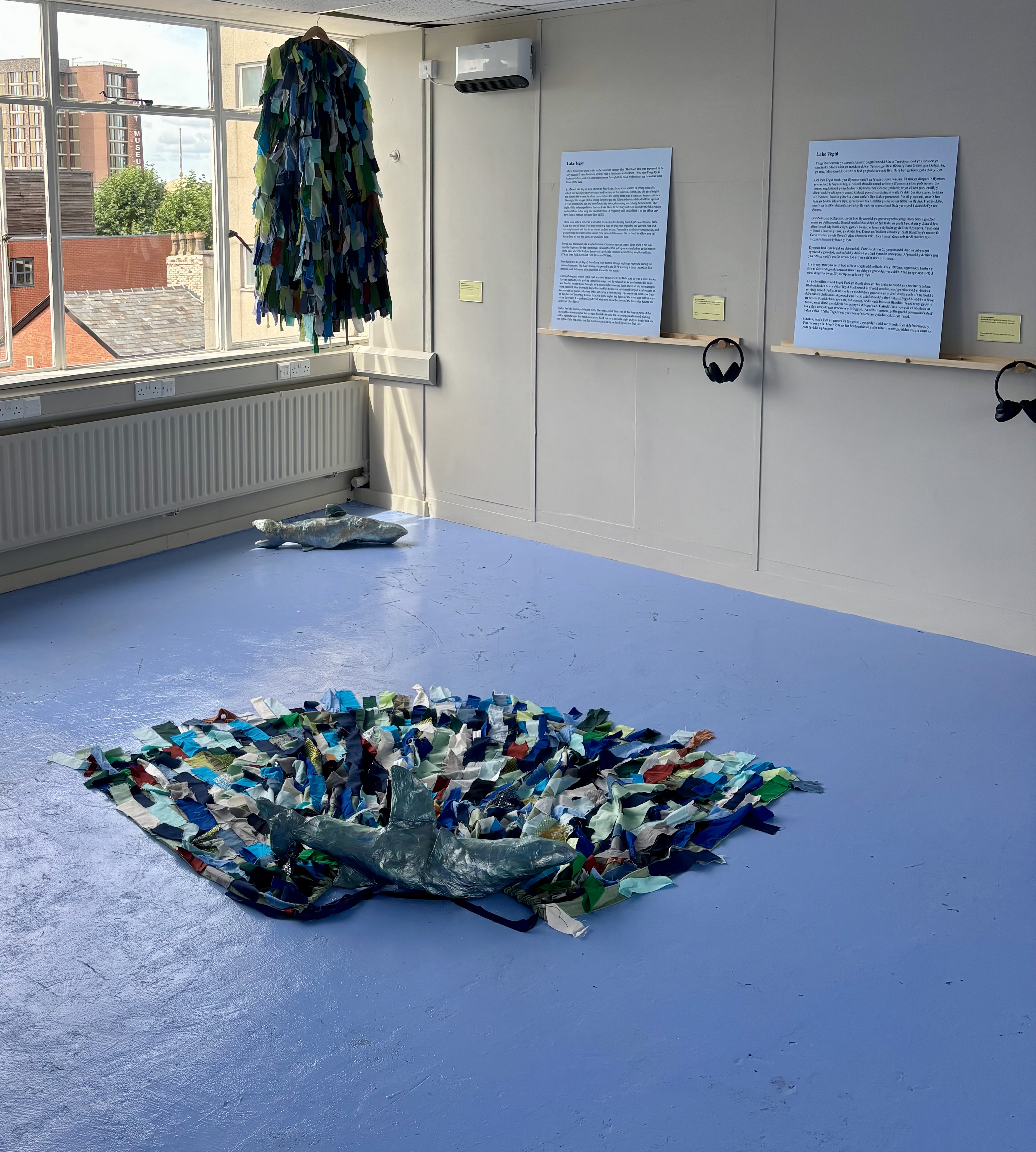
Becoming Mythological, 2026
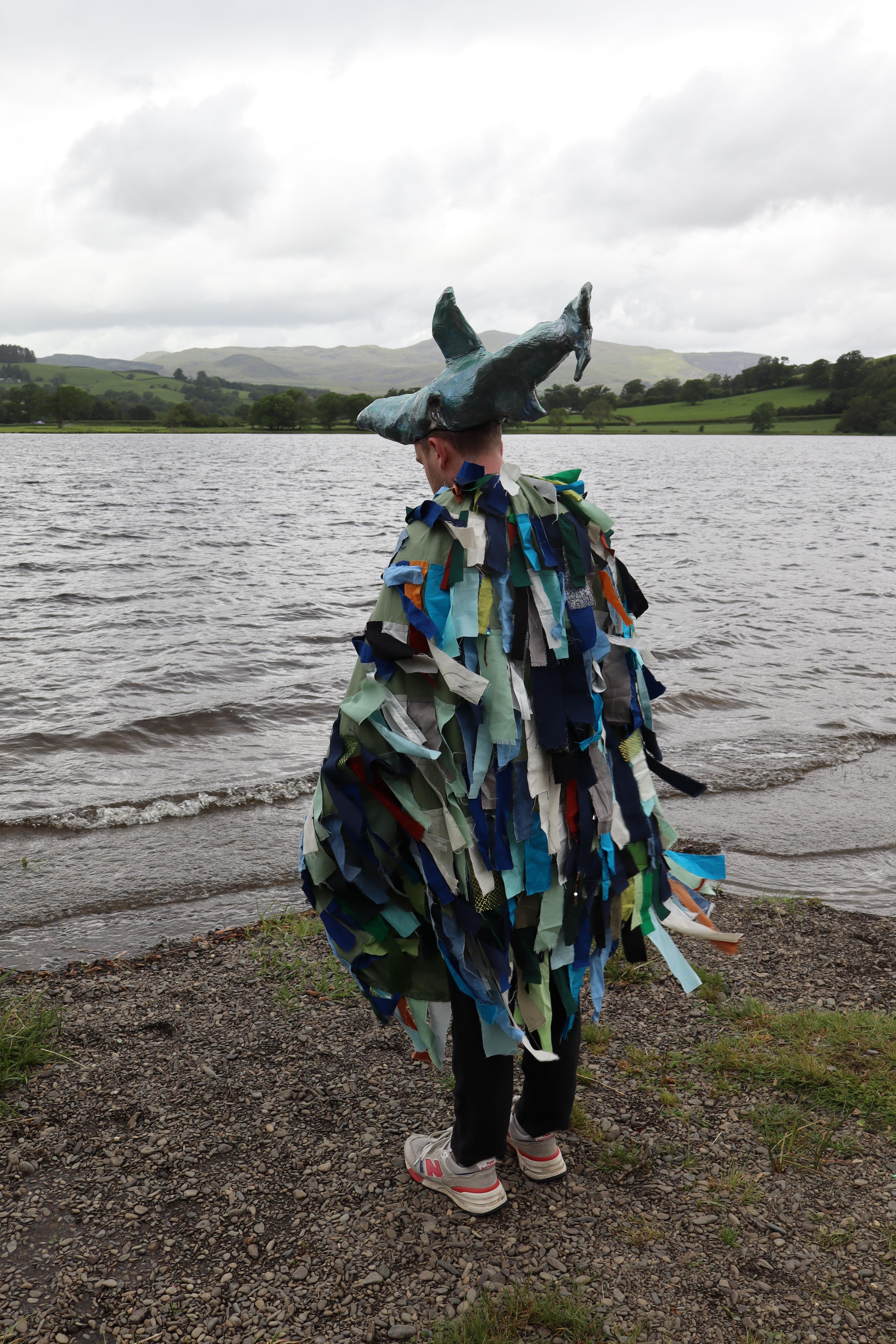
Costume and props.
Performance materials.
How to Enter the water, 2026
One-channel audio, 10 minutes
Contextual information
This exhibition is the first stage of a larger work in progress, an ongoing research enquiry titled Bodies in Water. The project seeks to establish swimming as a methodology for arts practice, situated within the broader field of the blue humanities; specifically, contemporary performance art practices connected to bodies of water. We have always been interested in walking as a way of thinking and generating art, and here we turn to swimming as a way of thinking and being with water.
There are three strands of enquiry. This exhibition is part of the first stage, looking at mythology as a narrative tool for understanding water and swimming. It focuses on Llyn Tegid, near Bala in North Wales. There are waterbodies local to Stockport that also provide interesting mythologies including Mermaids Pool in the Peak District; a personal favourite of ours as a site of water rituals dating back to the Celts. (It is rumoured on Easter Sunday a mermaid will appear, and if she looks favourably upon you you are granted eternal life and if she does not like what she sees, she will drown you). Llyn Tegid offers mythology, is environmentally significant, and culturally important as a location for mixed use water activities by local people and tourists.
For us, swimming is not defined as an athletic activity, but a mode of play that can be engaged with in a multitude of ways. It might look like cardio activity, or it might look like splashing, paddling or touching water. The body feels different in water, allowing movement that may not be possible on land (see Tonic of the Sea, Maggs, 2019). Swimming is a social act as well, frequently depicted in art history – particularly in the context of queer desire, through images of men bathing or swimming together (Boaden, 2024). Pools are important community spaces, where the right to leisure intersects with work and labour. Swimming is a practice of self-care: a way to relax, cool down, and de-stress. Water plays a role in ritual, sacred histories, and mythology. However, swimming also has its dangers: the inability to swim, rough water, or unsafe conditions can result in death. The sea often holds darker meanings; many people risk their lives crossing borders via water in search of safety. Swimming can be a matter of survival, and the history of the sea, especially the Atlantic, is deeply entangled with colonialism (Hameed, 2016).
We are influenced by (and our project title borrows from) the work of feminist posthuman cultural theorist Astrida Neimanis, who highlights the importance of embodiment in relation to our watery bodies:
We are not, on the one hand, embodied (with all of the cultural and metaphysical investments of this concept) while, on the other hand, primarily comprising water (with all of the attendant biological, chemical, and ecological implications). We are both of these things, inextricably and at once — made mostly of wet matter, but also aswim in the discursive flocculations of embodiment as an idea (Neimanis, 2017: 11).
Future lines of enquiry are concerned with community and the social aspect of water, and our ecological relationship to water. These will utilise different bodies of water.
Join us for a workshop, Sunday 16th August, 2-4pm: Build Your Own Mermaid!
Book via PINK’s website or by following the link below:
Places are free but booking is required. 18+
A workshop in response to the exhibition Bodies in Water, where you get to create your own mythological water being.
This workshop invites you to consider a body of water that resonates with you, and what mermaid or being you might invent that resides there: what does your mermaid represent? Where does it live? When is it seen? What ‘unknown’ is the mermaid a placeholder for? How might this being be interacted with? What does it look like, smell like, sound like?
Through prompts and provided materials (though you are also welcome to bring your own), we will devise our own mythologies that consider our relationship to water and the unknowns within them, culminating in making our own mermaids. The workshops begins with a short tour of the exhibition Bodies in Water to provide context for the exhibition.
Further reading and viewing suggestions
> John Cheever The Swimmer (1964), a short story, where a man swims home via the pools in his neighbours gardens. This has also been adapted into a film directed by Frank Perry (also called The Swimmer). These influenced Amy Sharrock‘s performance piece SWIM, where on 12th July 2007 50 people swam across London, via Lidos, ponds, lakes and swimming pools.
> Laura Hopes Crazywell (2018), a performance in which the mythology of Crazywell Pool in Dartmoor is activated by participants raising a rope from the water to ring a church bell.
> Vanessa Daws and Rosie Hermons work Swimming a Long Way Together (2021 – ongoing) a series of durational swimming performance events influenced by Mercedes Gleitze and her endurance swims. Also Vanessa Daws The Magic of Water (2018), which explores a mythological event off the coast of Ireland, using sculpture, participatory art, choreography and underwater recordings to recreate this mythology in a swimming pool.
> Janice Kerbel’s 2018 Sink, a complex synchronised swimming routine that examines the body, movement, and collective activity.
> Alfredo Barsuglia’s Social Pool, (closed 2014 with plans to rebuild). A pool in the middle of the desert several hours outside Los Angeles, reaching the pool required walking to secret GPS coordinates.
> Lisa Stansbie has made many works that focus on swimming, including 2014’s Nothing Great is Easy and 2015’s Swimming Machine, looking at the rituals, identities and processes of swimming.
> Tristan Gooley’s 2016 book How to Read Water, published by Hodder Press, that teaches the reader the signs and clues to look for to understand the waterbodies around them.
> Michael Laundry’s A History of Swimming (ongoing) uses theatre, dance and performance art to look at our relationship to water, swimming and hydrofutures. The Swimmer, draws from John Cheever’s short story to examine the socio-politics of the male body.
> Wild Swimming Walks Peak District by Matt Heason, published in 2024 by Wild Things Publishing, is a guide book to swimming and walking in the Peak District.
> Wild Swimming Walks Eryri/Snowdonia by Emma Marshall, published in 2024 by Wild Things Publishing, is a guide book to swimming and walking in the Eryri/Snowdonia.
> Ayesha Hameed’s Black Atlantis (since 2013), examining the Black Atlantic, illegalised migration and oceanic environments.
> Astrida Neimanis Bodies of Water, Posthiman Feminist Phenomenology, published by Bloomsbury in 2017. This book looks at the relationship between our bodies, made up mostly of water, and the world around us, through a feminist, embodied and ecological lens.
> Katie Maggs film Tonic of the Sea (2018) which explores Maggs relationship with sea swimming as a mode of emotional recovery.
French and Mottershead’s Waterborne, part of the series Afterlife. Audiences listen to audio via headphones, on a boat as it moves along waterways. The audio transports the body through time as it moves along the water, in connection with the microbiology of the water, describing the afterlife of your decaying body in water. (ongoing).
Rosten Woo’s (with Clockshop) What Water Wants (since 2024) is a site specific audio work for Los Angeles river, where audiences listen via headphones. An ‘audio tour (that) moves between a guided meditation and speculative disaster horror’, the audio allows listeners to experience the flow of the water. Recommended to listen at sunset in Los Angeles, at Lewis Macadams Riverfront Park, the audio can be accessed here.
Becoming Mythological images



Myths of Llyn Tegid Welsh audio
Myths of Llyn Tegid Welsh text
Yn gyfnod cynnar yr ugeinfed ganrif, ysgrifennodd Marie Trevelyan bod yr afon dee yn sanctaidd. Mae’r afon yn tarddu o ddwy ffynnon gerllaw ffermdy Pant Gwiw, ger Dolgellau, yn ardal Meirionydd; dwedir ei bod yn pasio drwodd llyn Bala heb gyfuno gyda dŵr y llyn.
Ger llyn Tegid roedd yna ffynnon wedi’i gyfyngu o fewn waliau. Er mwyn diogelu’r ffynnon o wrachod, tylwythau teg, a’r diawl rhoddir caead ar ben y ffynnon a chloi pob noson. Un noson, anghofiodd gwarchodwr y ffynnon rhoi’r caead ymlaen; er yn ôl sôn pobl eraill, y diawl oedd wedi agor y caead. Cafodd popeth eu dinistrio wrth i’r dŵr byrstio a gorlifo allan o’r ffynnon. Trochir y dref, a dyma safle’r llyn Bala’r presennol. Yn ôl y chwedl, mae’r hen bala yn bodoli islaw’r llyn, sy’n mesur tua 3 milltir yn hir ac un filltir yn llydan. Hyd heddiw, mae’r un broffwydoliaeth, heb ei gyflawni, yn mynnu bod Bala yn mynd i ddioddef yr un dynged.
Erstalwm yng Nghymru, credir bod llynnoedd yn gwrthwynebu ymgeision bobl i ganfod maint eu dyfnderoedd. Roedd profiad dau ddyn ar lyn Bala yn profi hyn. Aeth y ddau ddyn allan i ardal ddyfnach y llyn, gyda’r bwriad o fesur y dyfnder gyda llinell pysgota. Teithiodd y llinell i lawr ac y lawr, yn ddiderfyn. Daeth cofleidiant ofnadwy ‘Gall llinell byth mesur fi! Cer o ma neu gwnâi llyncu’r ddau ohonoch chi!’. Ers hynny, does neb wedi mentro trio darganfod maint dyfnach y llyn.
Dywedir bod llyn Tegid yn ddiwaelod. Canrifoedd yn ôl, ymgeisiodd deifiwr arbenigol cyrraedd y gwaelod, ond cafodd y deifiwr profiad hynod o arswydus. Mynnodd y deifiwr fod yna ddraig wedi’i goelio ar waelod y llyn a fu’n siŵr o’i llyncu.
Ers hynny, mae yna wedi bod nifer o olygfeydd pellach. Yn y 1970au, mynnodd rheolwr y llyn ei fod wedi gweld creadur mawr yn debyg i grocodeil yn y dŵr. Mae pysgotwyr hefyd wedi disgrifio bwystfil yn cripian ar lawr y llyn.
Yn y chwedlau, roedd Tegid Foel yn rheoli dros yr Hen Bala ac roedd yn rheolwr creulon. Rhybuddiodd Duw y dylai Tegid Foel newid ei ffyrdd creulon, ond gwrthododd y rheolwr ystyfnig newid. Felly, ar noson fawr o ddathlu a gwledda yn y dref, daeth cosb o’r nefoedd i ddiweddu’r dathliadau. Agorodd y nefoedd a diflannodd y dref o dan lifogydd o ddŵr o fewn un noson. Roedd chwaraewr telyn dalentog, oedd wedi bodloni ffrindiau Tegid trwy gydol y noson, wedi dianc gan ddilyn can aderyn i ddiogelwch. Cafodd Bala newydd ei adeiladu ar lan y llyn newydd gan oroeswyr y llifogydd. Ar ambell noson, gellir gweld goleuadau’r dref o dan y dŵr. Efallai Tegid Foel yw’r un sy’n llercian dyfnderoedd Llyn Tegid.
Heddiw, mae’r llyn yn gartref i’r Gwyniad , pysgodyn sydd wedi bodoli yn ddyfnderoedd y llyn ers oes yr ia. Mae’r llyn yn fan boblogaidd ar gyfer nifer o weithgareddau megis canŵio, padl fyrddio a physgota.
Myths of Llyn Tegid English audio
Myths of Llyn Tegid English text
Marie Trevelyan wrote in the early twentieth century that ‘The River Dee was supposed to be very sacred. It rises from two springs near a farmhouse called Pant Gwin, near Dolgelly, in Merionethshire, and it is asserted it passes through Bala Lake without mixing its waters with those of the lake.
(…) Near Lake Tegid, now known as Bala Lake, there was a walled in spring with a lid which had to be put on every night and locked, so that witches, fairies, and the devil might not disturb the waters. In close proximity to the spring there was a large and important town. One night the keeper of this spring forgot to put the lid on; others said the devil had opened it. The waters burst out and overflowed the town, destroying everything before them. The sight of the submerged town became Lake Bala. In the story old Bala is under the lake, which is about three miles long and one mile wide. A prophecy still unfulfilled is to the effect that new Bala is to meet the same fate. (C.D)
There used to be a belief in Wales that lakes object to having their depths ascertained. Bala Lake was one of these. Two men went in a boat to what was regarded the deepest part, and ran out plummet and line to an almost endless extent. Presently a terrible cry rent the air, and a voice from the waters cried aloud: ‘line cannot fathom me. Go or I will swallow you up!’ Since then no one has dared to sound the lake.
It was said that Bala Lake was bottomless. Centuries ago an expert diver tried it, but was terribly frightened by his experience. He asserted that a dragon was coiled up at the bottom of the lake, and if he had not been very careful the creature would have swallowed him. (Taken from Folk-Lore and Folk Stories of Wales).
Now known as LLyn Tegid, there have been further strange sightings reported during the twentieth century. The lake’s manager reported in the 1970’s seeing a large crocodile-like creature, and fishermen also described a beast in the water.
The mythological prince Tegid Foel was said to rule over Old Bala, and he was a cruel leader. He was warned by the gods to change his ways, and he refused, so as punishment his town was flooded in one night, the night of a great celebration and feast where all the townspeople were gathered, thus drowning Tegid Foel and his followers. A talented harpist was brought in to entertain his guests, who was led to safety by a bird singing. The survivors built new Bala on the shore of the newly formed lake. On some nights the lights of the town can still be seen under the water. It is perhaps Tegid Foel who now takes the form of the beast that haunts the depths of Llyn Tegid.
Today, the lake is uniquely home to the Gwyniad, a fish that lives in the deeper parts of the lake and has done so since the ice age. The lake is used for canoeing, paddleboard, fishing and is a popular spot for water recreation. Look out on a moonlit night and you might just see the lights of the old town, but don’t swim out too deep or the dragon may find you….
How to Enter the Water audio
How to Enter the Water text
Before the water, you pack a bag, with a towel and swimming costume, water to drink, maybe food, maybe a book to read. You walk round the corner from your house to the local pool. You wait at your house for your friend to pick you up to take you both by car, across the country. You organise a time to meet at the train station, to hike two hours to the water.
The journey there makes you a little sleepy, too warm and comfortable, and a little unsure if you want to get undressed and cold. You are excited because now you are going to play. You are going to do handstands with your friends and gossip, and have competitions in your head to see who swims the most laps. You are going to sit in the sauna and dare each other to go under the cold water plunge bucket. You are going to dip your toes in the freezing mountain water and walk slowly, watching your feet turn red against the white of your legs. You will slip on the mossy rocks underfoot and grab each other and laugh at how close you came to falling in. You cannot see the edges of the lake. You arrive at the water after your hike and agree you must have lunch before you do anything else. You promise to come back next time with rubbish bags to take what other people have dumped. You walk around the pool, imagining the routes that the celts took to get here 3000 years ago. You dip your hands in and you lie down on a convenient rock to smell the water. It is brown and you cannot see the bottom and you decide that next time you will get in, that this time you just wanted to see it. You are secretly relieved yet frustrated with yourself. If your friend went in you definitely would have done too. You stare into the water, willing yourself to see the creature you have read about. You have been told not to go into the water.
You put on wetsuits and water shoes this time, expecting the cold shock of the water to make your body contract, but the fabric keeps the wetness at a distance. Together you walk slowly in, until it is deep and you are on tip toes. Kids in a sailing boat are laughing at your hesitation. You want to swim out to the middle, but you have been told not to, and what if you can’t get back. It is hard to hear much over your laughing, but as you calm down you hear the water rolling gently into you, itself, the shore. You can hear the wind. It has been stormy lately, and the sound of the trees in the wind and the grey sky makes it sound colder than it is. The water quickly gets deeper than you can reach, and the wind is dragging you away from where you have left your belongings on the shore. You have been told the dangers of the deepest part of the water, of men who have been dragged to its depths by the unknown.
It is summer now, and for the first time here you see other people swimming. Only some have wetsuits on. You want to feel the water directly on your skin. Swimming this time means changing in front of strangers, undignified, pretending you are able to cover yourself whilst lumpy flesh squeezes in and out of lycra. The ground is sharp on the soles of your feet, digging into old cuts. You hope the water is clean so bacteria doesn’t get in, but this anxiety is not enough to stop you. The water looks clear, you can see the bottom standing on the shore. It must be safe. You walk slowly in, adjusting to the temperature, and stand at waist height, taking deep breaths that quicken when the water hits your groin, waiting until your body takes over and launches you in the water before your mind can decide not to. You hold your head up unnaturally, trying to protect your eyes and nose and mouth from freezing splashes as you make sharp whistling noises through your teeth whilst your lungs for a moment seem to stop, unable to refill air from the cold, your chest and back warming as oxygen returns to your body. Your legs and arms feel almost warm now, as you get more confident, trying to float and turn from your front to your back, making big wide gestures with your arms and legs, like you learnt to as a child, if you keep swimming through the water you won’t notice the cold. Maybe you will dunk your hair in and take some of this lake with you on the car ride home, until finally it evaporates in time for bed. Your skin smells mossy and green, if green were a smell.
It is time to get out sooner than it should be. As you rise out of the water, standing looking for your towel, you notice fresh goosebumps and shiver, having forgotten you are cold until now. Wanting to return to the water, you instead dry your limbs as quickly as you can, scrubbing roughly and ineffectually. Holding your towel around you with one hand, you fight your costume with the other to pull it down. You tug at underwear that sits uncomfortably on damp skin, sticking to parts of you. You know even when you are dressed it will be a while before clothes feel right on you, until you are fully dry. You are not supposed to get dressed yet.
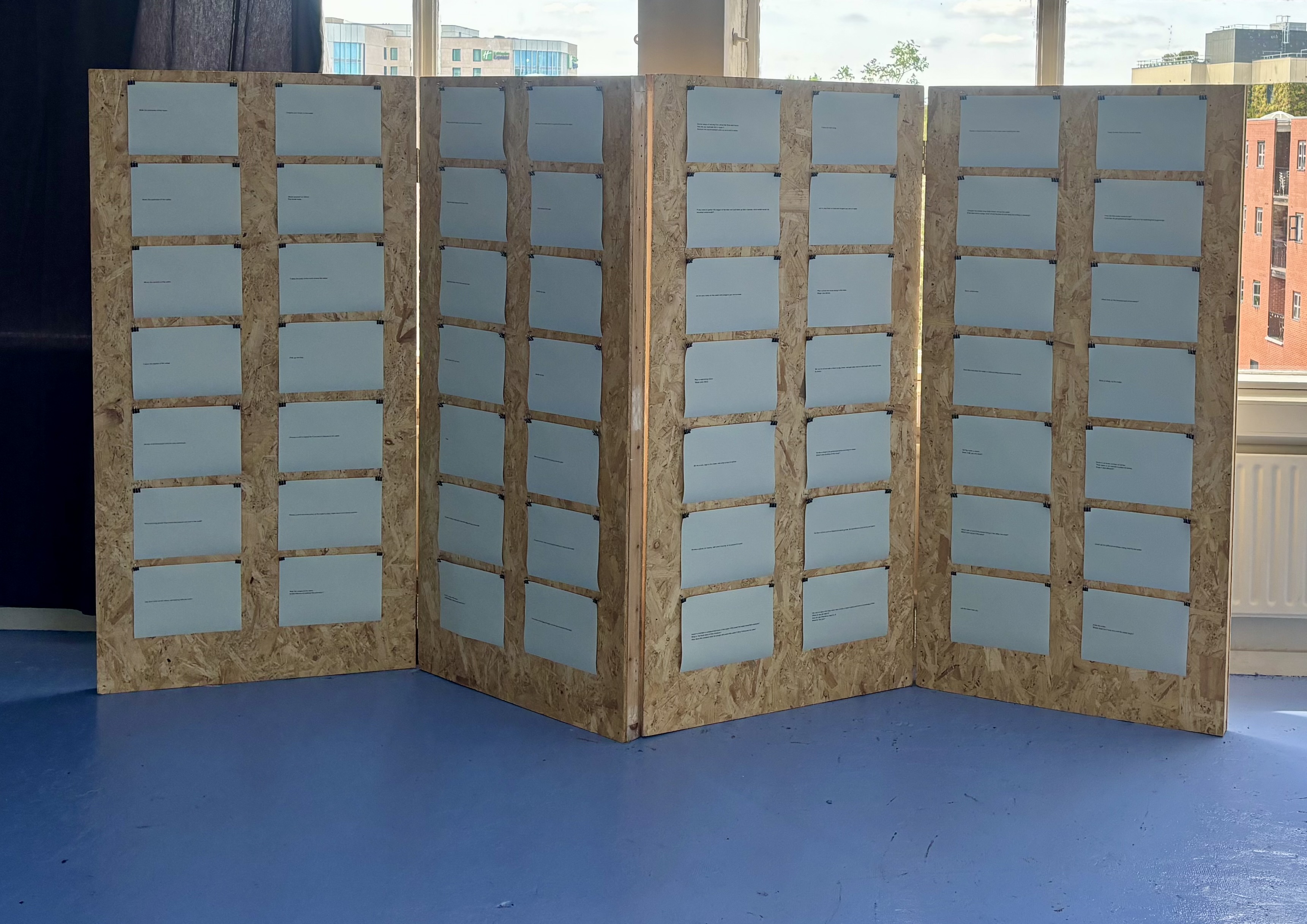
Scores for Swimming
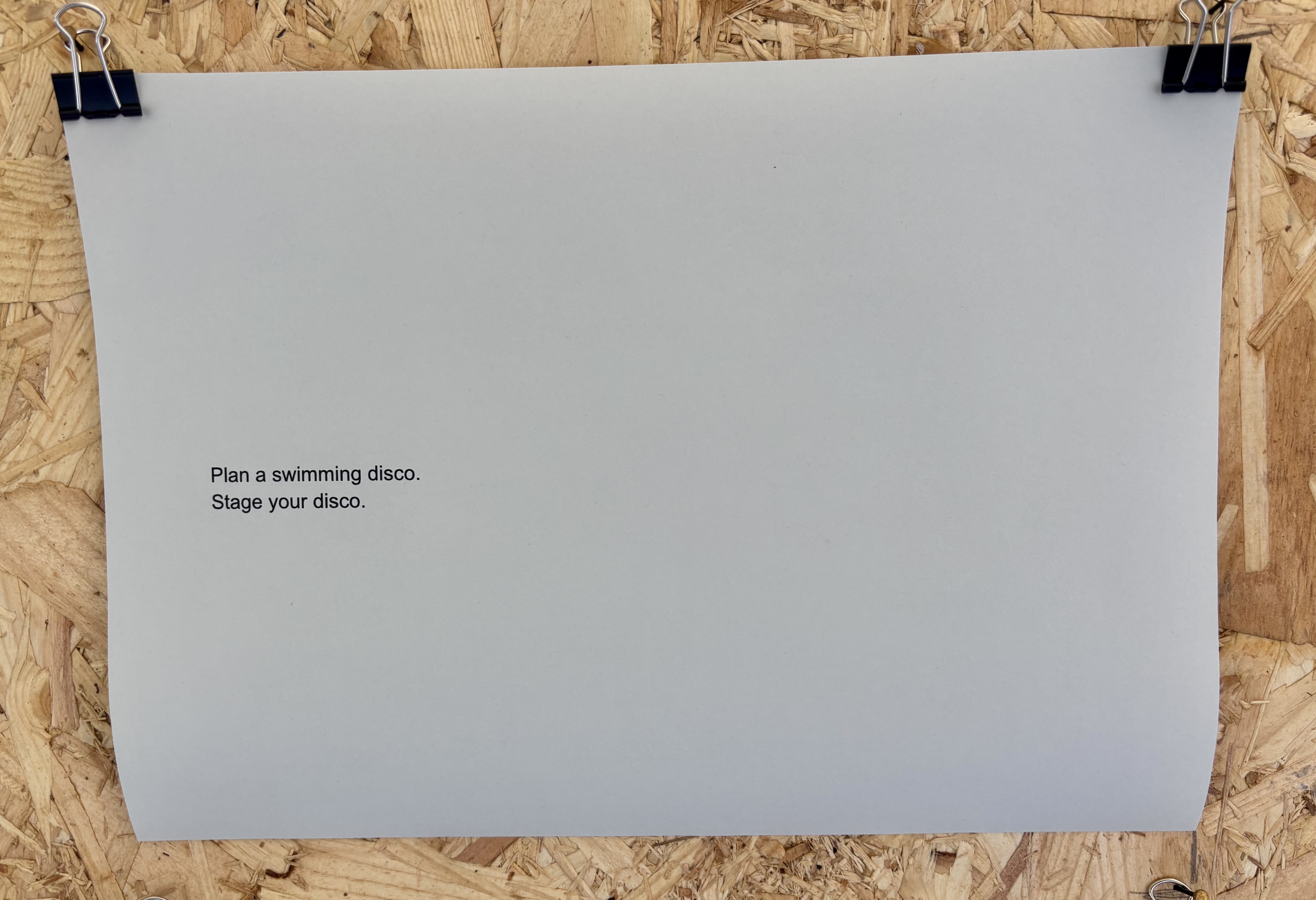
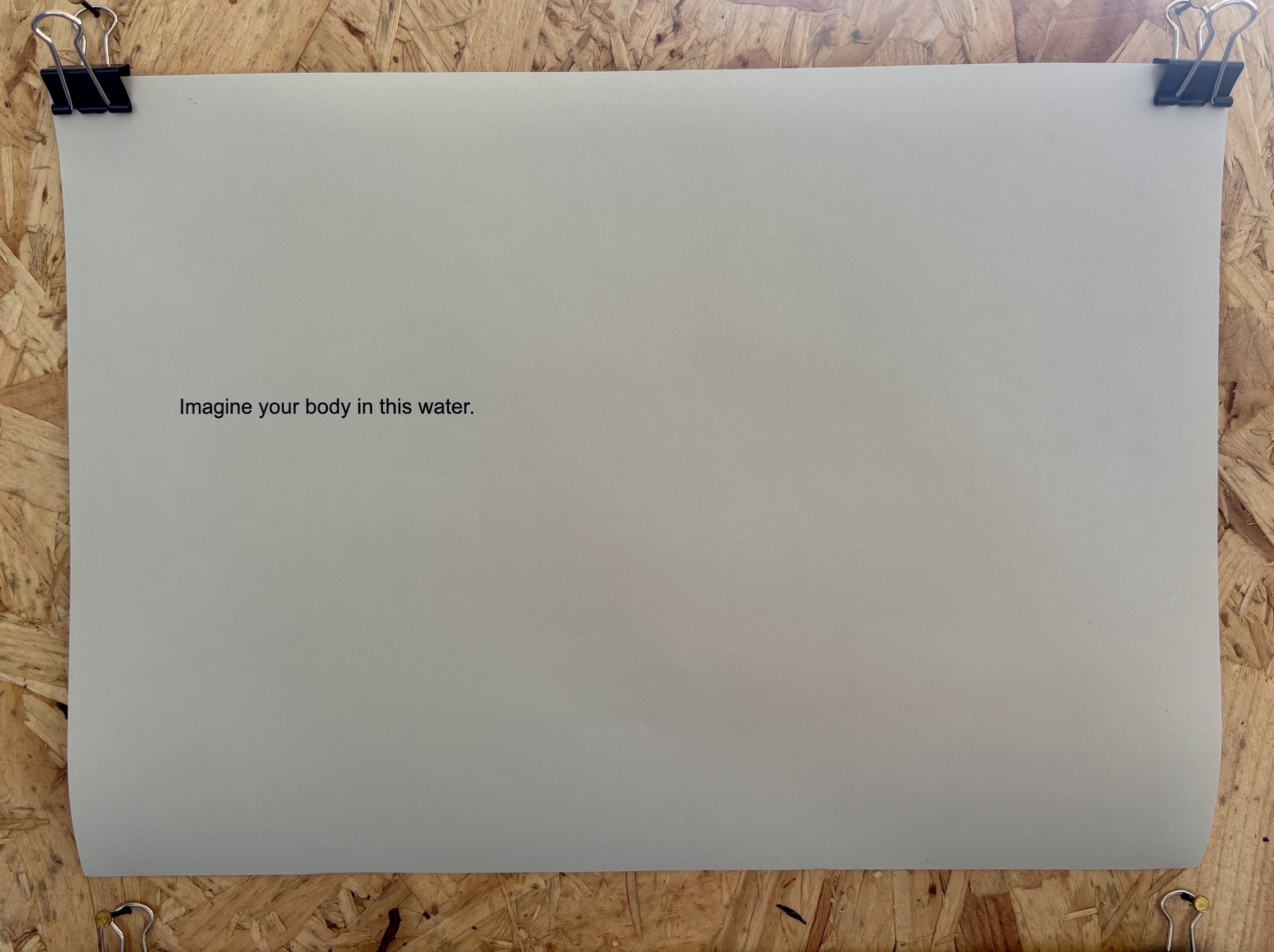
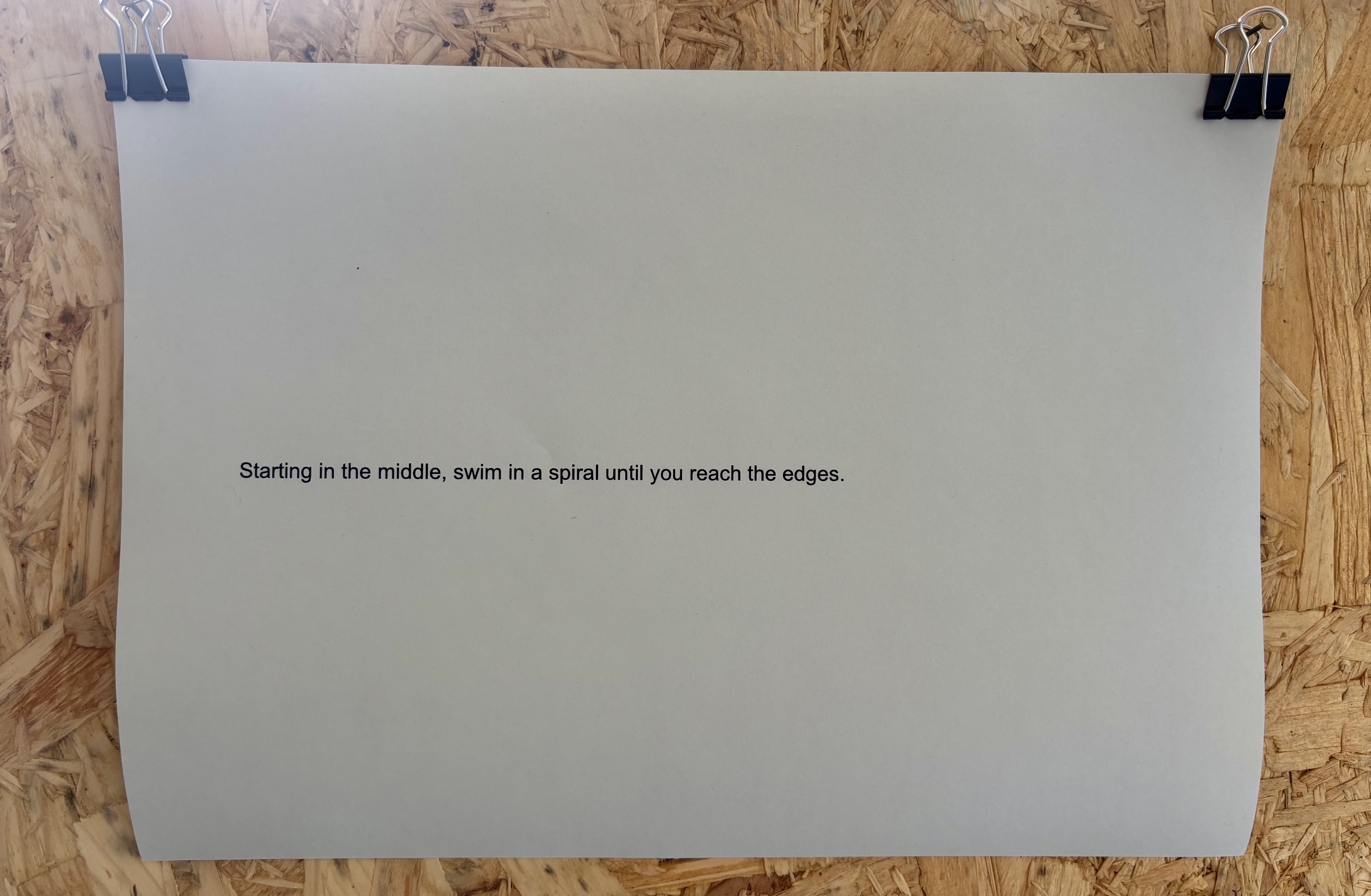
Walk the perimeter of the water / You are an alien who has never seen a lake or water before and have no knowledge of this. What do you do with it? How do you interact or react to it? What is it to you? / Imagine your body in this water / Swim the perimeter of the water / Make yourself an island / Put down roots / Follow the ripples of the water / Follow the path of the birds above the water / Mimic the sounds of the water / Starting in the middle, swim in a spiral until you reach the edges / Pick up the litter / Raise the lakes water level with your body / Find colouring pencils that match the colours you see in the water / Starting at opposite edges, you and a friend swim towards one another / Choose a call or signal for if you are in distress in the water / Devise a synchronised swim for solo swimmers / Weave in and out of the trees at the water’s edge, make them your dance partner / Lap your body on the shore, connecting with the water / Walk the edges of the water. Is this different to walking the perimeter? / Swim the edges of the water. Is this different to swimming the perimeter? / Find islands in the water / Log all the stones on the shore, recreate them / Identify the birds / Identify the fish / Give names to the types of ripples, waves and movement of the water / Create waves with your body / Float / Mark on your body how far you can go into the water / If it were a colour, what colour would the feeling of water on skin be? / If it were a sound, what sound would the feeling of water on skin make? / Devise ways of moving that reflect the flora and fauna. How do you replicate this in water? Perform this synchronised swim on land and in water / If you were to gather the edges of the lake and pull them up like a blanket, what worlds would be revealed underneath? / Follow the bird song / Lie on your back on land and imagine you are on water / Lie on your back on the water and imagine you are on land / Plan a picnic for every being in the water. Stage your picnic / Plan a swimming disco. Stage your disco / Go out on a boat with a friend at day break, tell each other stories until it gets dark, then go back to shore / Sit on a rock, legs in the water, and sing songs to sailors / Devise a ritual to be performed before entering the water. What is the intention of the ritual? / Devise a ritual to give thanks to the water when leaving the lake / Swim further than you’ve swam before / Devise a game, for teams, with point scoring, to be played in water / Devise a chant, such as heard at football games, for spectators to sing during your game / How did this water come to be? Consider its geographical beginnings and its mythological beginnings / Invent a monster or creature that lives in the water. Why does the water need this creature? / What is the back story of this creature? / How does this creature react to people who enter the water? Why? What are its rules? / Consider the shape your body draws across the water / If the lake were a page, what would the line of your body be writing or drawing? / Swim underwater / What lives at the deepest part of the water? / Describe how deep the water is without using measurements or numbers / Write a lullaby to the water / Tell the water a secret. Does it tell you one back? / Swim in an even number of circles. Then swim in an uneven number of circles. Does it feel different? / Which part of your body enjoys being in the water the most? Which part enjoys it the least? / Count all the different emotions being held by the water / Let the water heal you / Enter the water / Where does your body end and the water begin?

