Image credit Rosy Whitemore
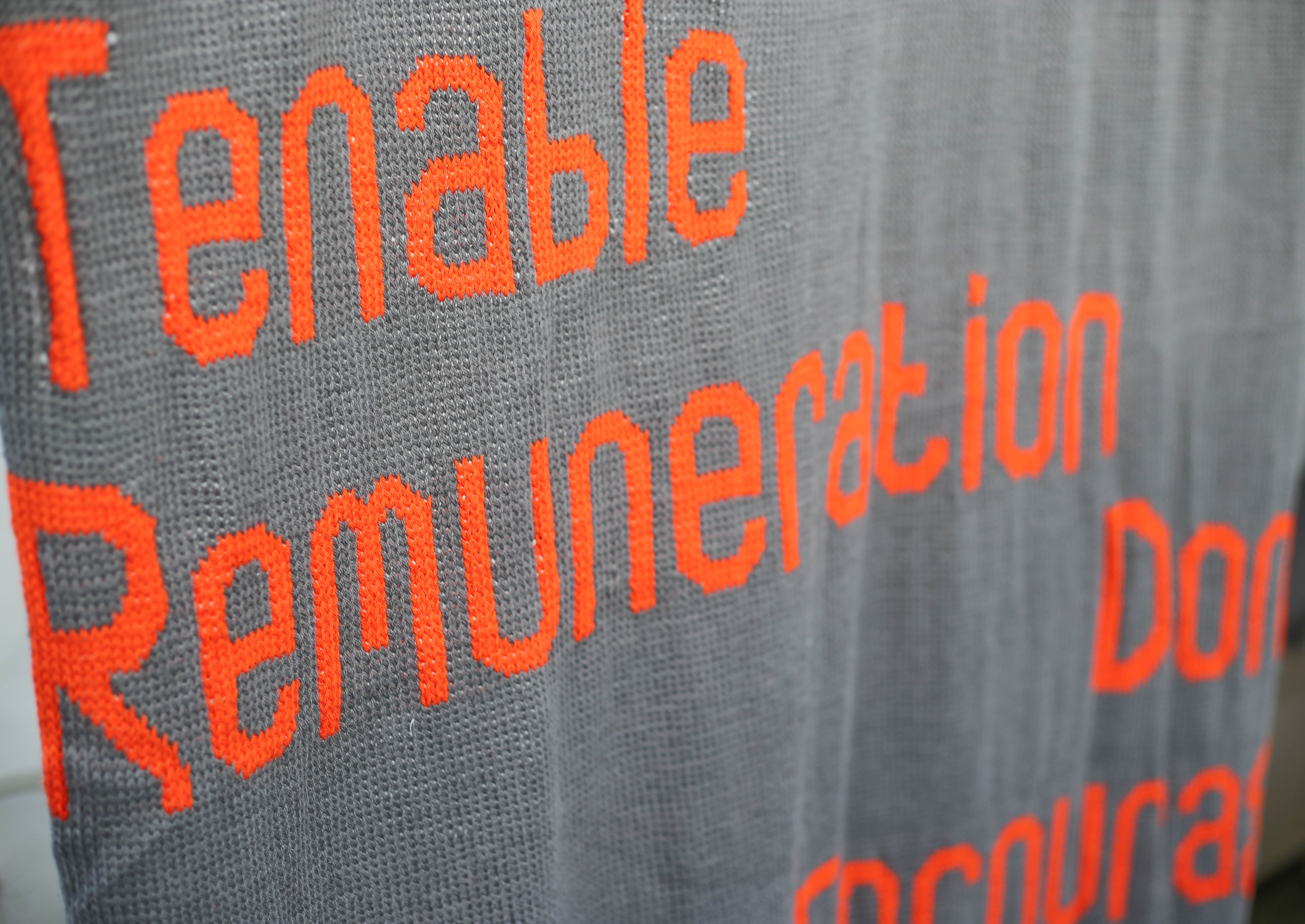
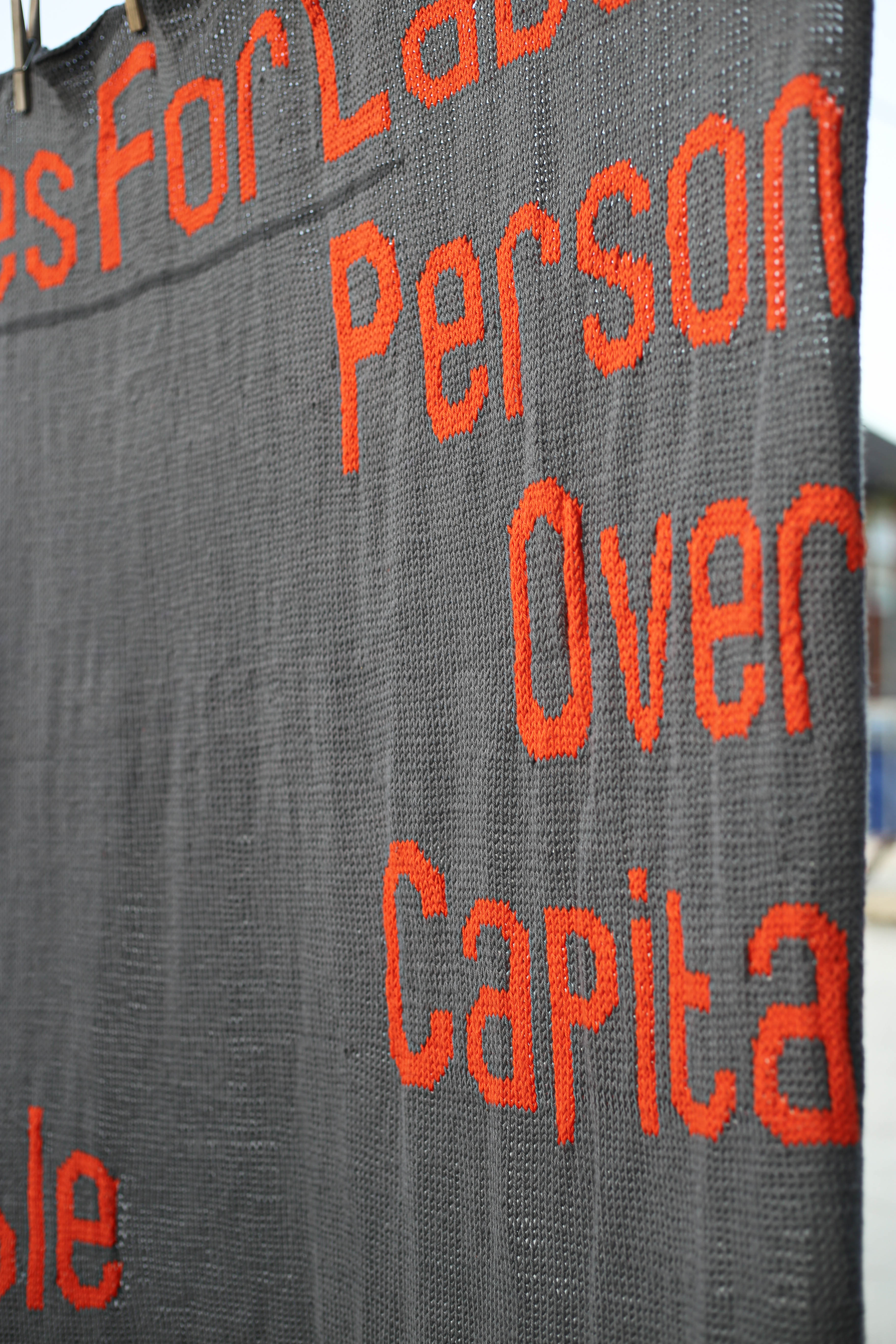
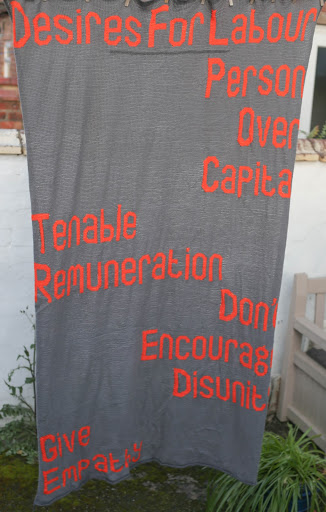
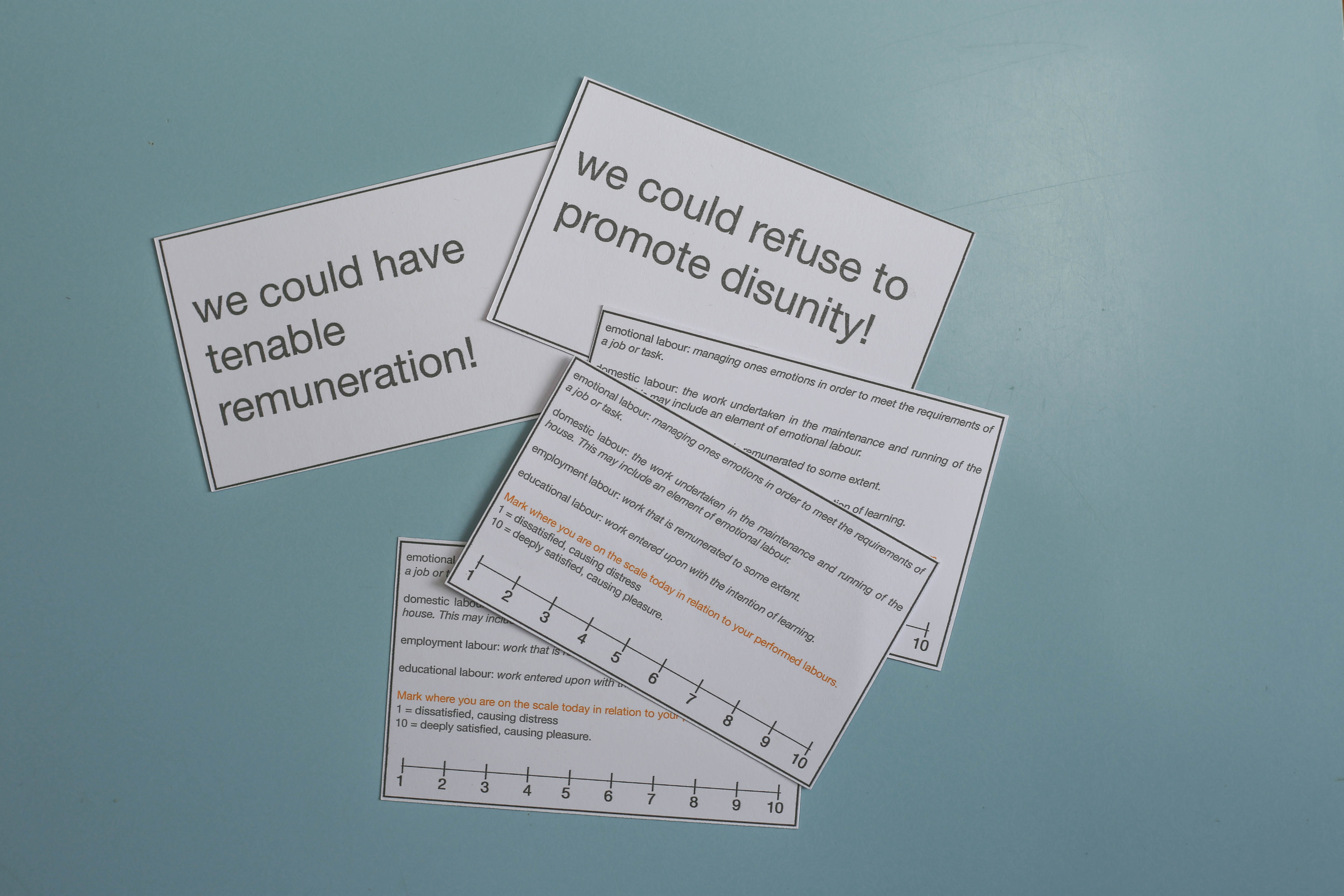
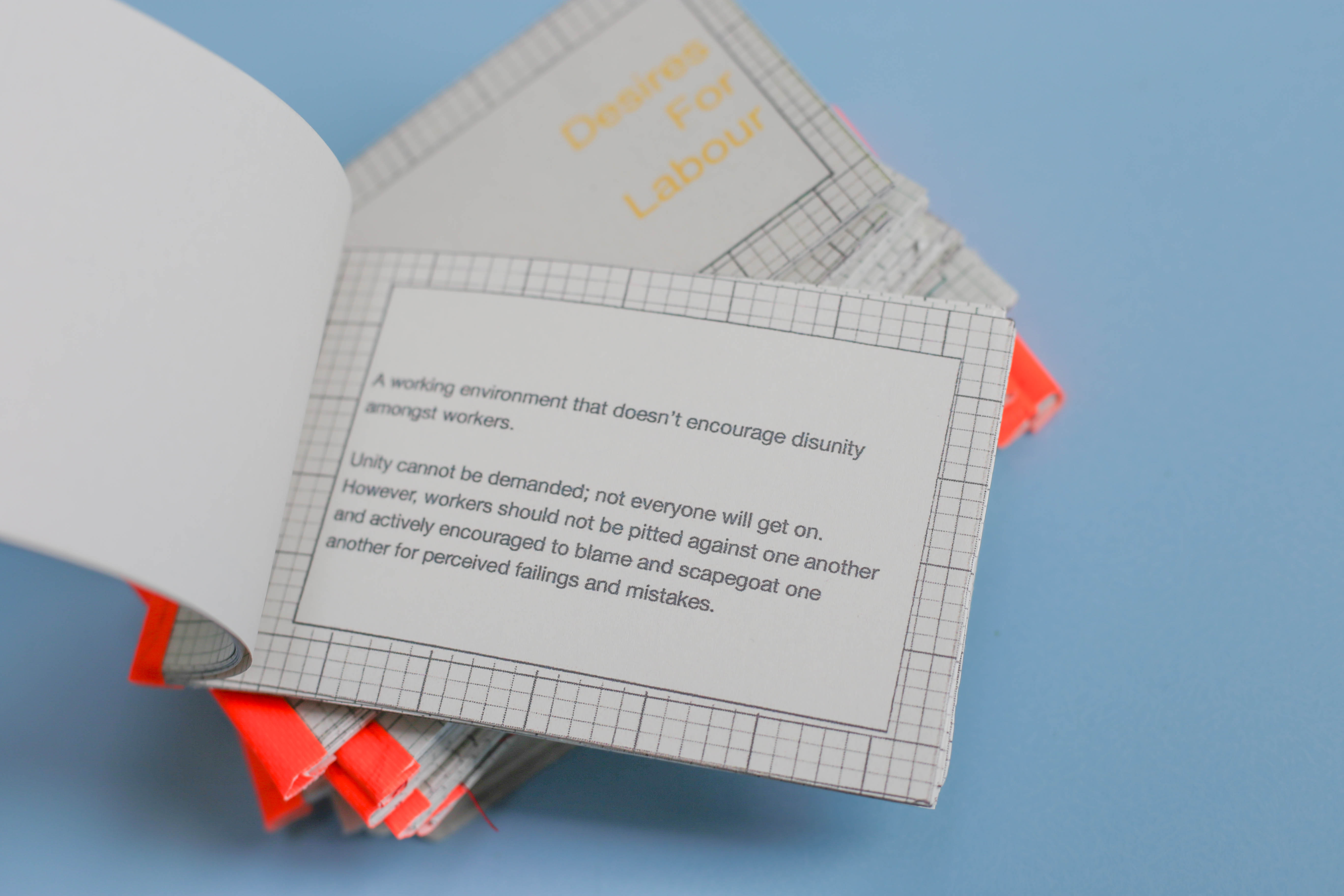
A series of leaflets, cards and a knitted banner that form a response to labour precarity, inviting readers to reflect on their own labour conditions.

This work was produced through documenting the ways we officially and unofficially clocked in and out of work, and categorising the types of labour we perform at work and in the home.

It asked readers to score their relationship with different forms of labour on a 'labour pleasure index'. This includes:

> employment labour (the ways in which we make ends meet, officially and unofficially the exchange of our time and the performance of tasks for money),

> educational labour (in relation to ‘official’ educational activities and other moments of learning required as part of our paid work),

> domestic labour (this refers to the work done to look after our domestic environments. This involves both work for the self, for others [when we might be cooking or cleaning voluntarily or not, for housemates] and work done for us [when others cook and clean for us]. This also involves other activities related to running a domestic environment: admin, dealing with landlords, utilities companies etc),1

> emotional labour (the managing of ones emotions and communication in order to do your work 'well'; i.e., performing good customer service when feeling upset)2

> affective labour (where your labour is designed to produce an affect in someone [e.g., therapy, advertising]),3

> immaterial labour (a shift from a Marxist understanding of capital to ‘the labor that produces the informational and cultural content of the commodity’),4

The zines included games for 'making' time at work, and the back of each zine had a letter pattern that when brought together comprised the knitting pattern for the banner.

The banner contained the following phrases, that shift between concept and demand, which were devised through our experiments at work:

> Person Over Capital

> Tenable Remuneration

> Don't Encourage Disunity

> Give Empathy

Desires For Labour was informed by our precarious hospitality jobs and our precarious teaching contracts, and reflects a balance between hospitality allowing us the flexibility to pursue academic study, with the anxiety of this work not allowing us to prepare for the future and giving us little autonomy at work.

The slow process of knitting the banner added another context to how we think about work, where time is experienced differently based on the activity of work at hand.
- Since the 1970’s, domestic labour has been part of a feminist Marxist discourse, for example through the work of Silvia Federici and Wages for Housework (1975). ↩︎
- This concept was developed by Arlie Hochschild in the book The Managed Heart (1983) ↩︎
- See Hardt & Negri Empire (2000) and Multitude: War and Democracy in the Age of Empire (2005). ↩︎
- As defined by Italian sociologist Maurizio Lazzarato in ‘Immaterial Labour’ in
Radical Thought in Italy: A Potential Politics (1996) ↩︎
 greenandowens